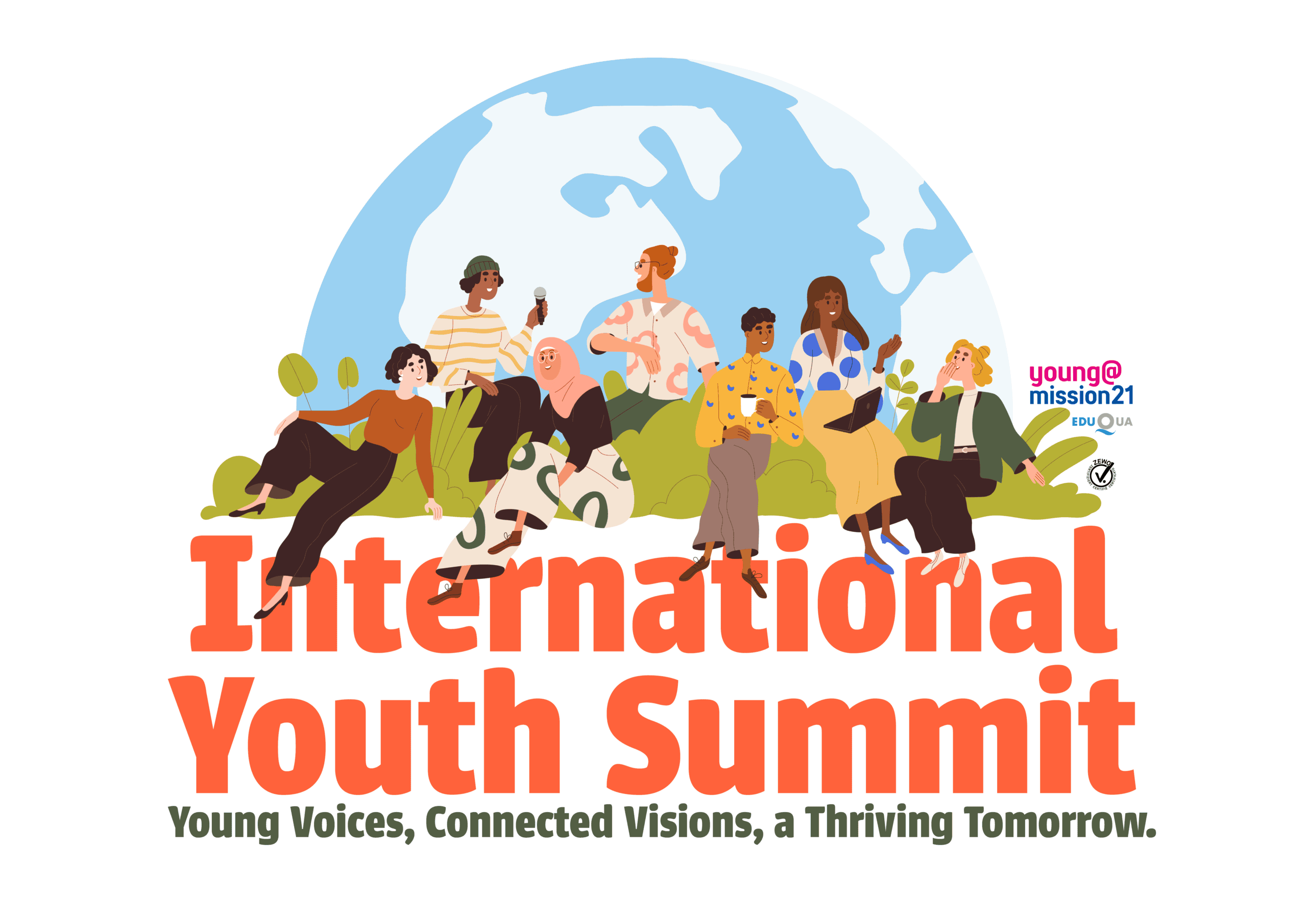
Youth Summit 2026
by Young@Mission21
The Youth Summit 2026 is a two-day, international online event for young adults, where participants aged 18 - 35 can exchange ideas and learn together on key issues of global justice.
On 27 and 28. The International Youth Summit will take place online via Zoom for the 9th time on March 2026. This year, everything revolves around the preservation and promotion of biodiversity.In the three sessions, we will be looking at new perspectives, socio-cultural approaches and, of course, the commitment of young adults worldwide.
The Youth Summit 2026 will soon be live. The young@mission21 team and the Sounding Board are pleased to announce that this year's edition will be larger than in previous years. After around 140 young adults from 38 countries registered in 2025 and the participants were highly engaged in the event, we would like to fulfill their wish for more space to share and learn together. To this end, we have extended the Youth Summit to two days and more than doubled the time! So mark the dates in your calendars: the Youth Summit 2026 will take place online via Zoom on Friday, March 27 and Saturday, March 28, 2026. Register today here, We look forward to your participation.
The Youth Summit 2026 will take place during the following time slots. All times are in CET. You can find your time zone here.
| Friday, March 27, 5:00 p.m. to 6:30 p.m. CET | New Perspectives on the Impacts of a Decrease in Biodiversity and Local Adaptations |
| Saturday, March 28, 2:00 p.m. to 3:30 p.m. CET | The Heritage of Biodiversity Conservation |
| Saturday, March 28, 4:00 p.m. to 5:30 p.m. CET | Youth Actions against the Decrease in Biodiversity |
Speakers

Protecting water bodies and human health by reducing the use of pesticides in Switzerland
Fabienne Genewein (Switzerland)
Fabienne Genewein is currently an intern at WWF Switzerland, where she is working on agricultural policy with a focus on reducing the use of synthetic chemical pesticides in Switzerland.

Indigenous knowledge and the responsible use of biodiversity
Junia Anilik (Malaysia)
Junia Anilik is a Kadazan from Sabah, Malaysia, and works for the PACOS Trust. She supports indigenous communities to strengthen traditional knowledge, self-governance and biodiversity conservation through youth and community-led initiatives.

The cultural and religious heritage of biodiversity conservation
Regula Armingeon (Switzerland)
Regula Armingeonis an environmental engineer and former IT specialist. She works as a climate protection officer for the Reformed Church of Bern-Jura-Solothurn. Her work focuses on the preservation of creation and strengthening communities in the mindful use of the earth's resources.

Gender justice and biodiversity protection
Katherine Edith Meza Alegre (Perú)
Katherine Meza is a sociologist and gender expert with many years of experience in supporting indigenous organizations and community-led projects in the Andes. Ihr focus lies on gender equality, participatory processes, climate justice and program support.

Perspectives of indigenous and local communities on biodiversity conservation
Glendy Caichihua (Perú)
Glendy Caichihua is a forest conservation expert with experience in leading conservation and ecosystem-based adaptation initiatives in the Andean and Amazonian regions of Peru. Her work focuses on strengthening local capacities to secure livelihoods and improve adaptation to climate change, incorporating gender, intercultural and territorial approaches.

The cultural and religious heritage of biodiversity conservation
George Matey Okorley (Ghana)
George Matey Okorleyis a faith and development expert, environmental strategist and author working at the intersection of theology, Community-Edevelopment and climate resilience. With his work, he is committed to the preservation of Creation, indigenous knowledge and youth leadership development, and supports churches and communities across Ghana and West Africa in linking environmental stewardship, ethical governance and sustainable development .

Effective nature conservation with remote sensing in conflict-affected regions
Manuel Weber (DR Congo)
Manuel Weber is an environmental scientist and works as a biomonitoring and research consultant for the Upemba-National Park in the DR Congo. At the same time, he is doing his doctorate at Wageningen University in the Netherlands in the field of remote sensing and geoinformation systems. He is working on the question of how sustainable and effective nature conservation can be achieved in conflict-affected regions.

Bolivian youth for biodiversity
Denilson Gary Sarco Hancco (Bolivia)
Denilson Gary Sarco Hancco is a lawyer with a degree from UMSA and the Andean University and is involved as a parliamentarian in the areas of international law, human rights, environmental justice, sustainable finance and youth leadership.

Bolivian youth for biodiversity
Gastón Joshua Zientarski (Bolivia)
Gastón Joshua Zientarski is a lawyer and political activist with 15 years of experience in activism. He is a member of the youth community of WWF Bolivia.

Traditional knowledge and modern science: building a bridge between culture and science for the global protection of biodiversity
Ezekiel Nartey (Ghana)
Ezekiel is a conservation strategist who specializes in the concept of „two-Eyed Seeing“ - combining indigenous ecological knowledge with modern data science to develop holistic, community-led solutions to protect the world's most endangered ecosystems.
The organizers
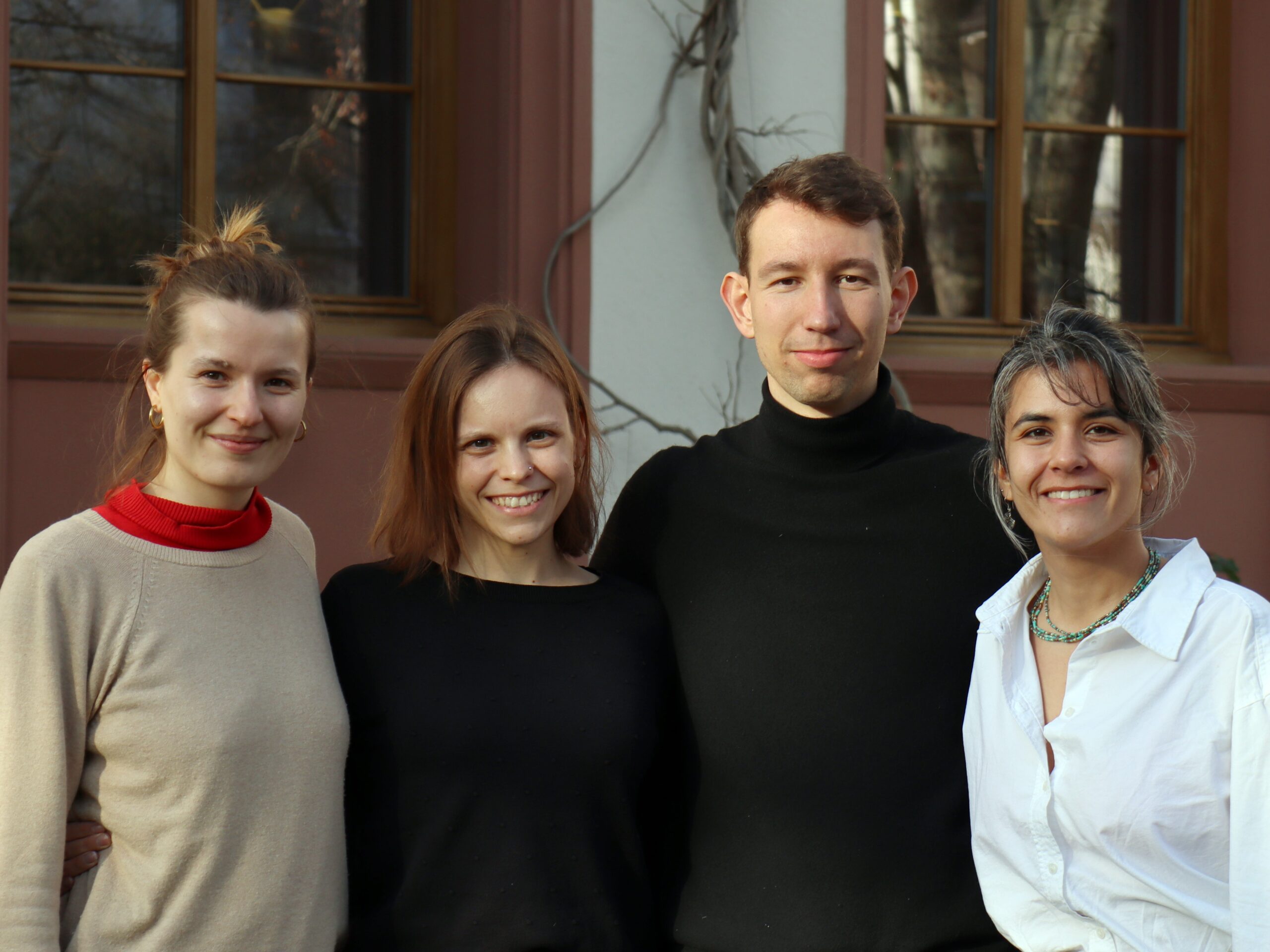
We are Mandula, Sarah, Jonas and Carole.
We work part-time for young@mission21.
Contact
Tel.: +41 (0)61 260 22 39
► E-mail