Interview with Barbara Heer: Protection and prevention
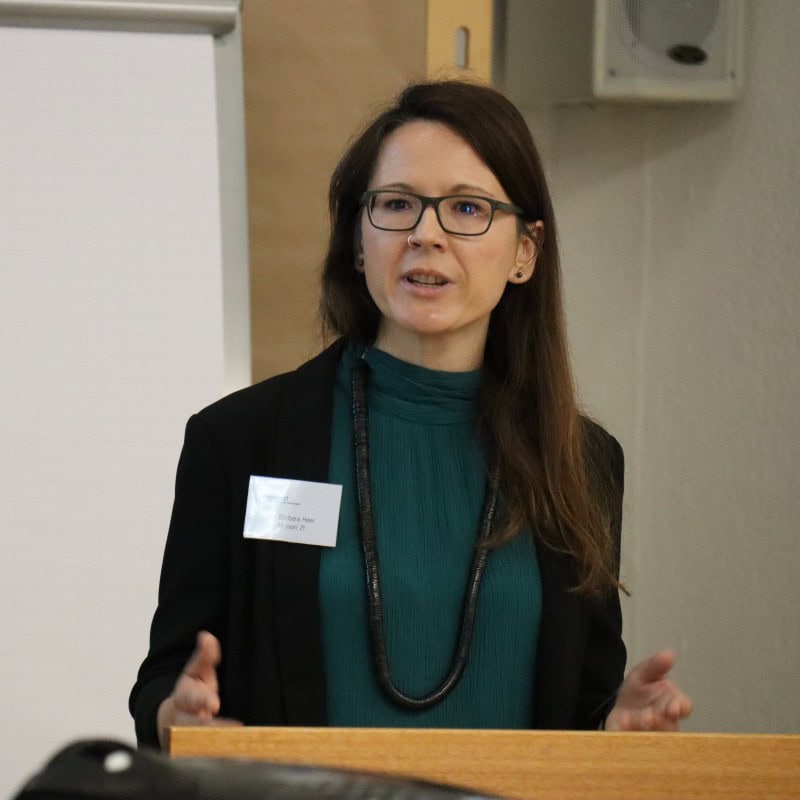
Gender-based violence is also a reality in Switzerland. Barbara Heer, Gender Equality Officer at Mission 21, explains what responsibility churches have, why binding protection concepts are key and why men play a central role in bringing about change.
What does your work as Head of Women and Gender at Mission 21 look like?
I advise all employees and the management of Mission 21 on the topic of gender equality and ensure that they have the necessary tools and knowledge at their disposal. I also work with other specialists to initiate topics for innovative pilot projects in our network, such as the recent topic of masculinities.
Men and images of men play a key role in achieving greater gender equality and preventing gender-based violence. It is important to question harmful ideas of masculinity that can encourage or justify violence.
«Men and images of men play a key role on the path to greater gender equality»
At the same time, narrow gender images also restrict the freedom of men and boys - often with consequences for their mental health. Last but not least, it is important to recognize that men are also affected by sexualized violence.
Gender relations vary around the world. How does Mission 21 deal with this?
What gender equality means varies from context to context and is also part of a social negotiation process within a country. The partner churches and organizations of Mission 21, which are specifically committed to combating gender-based violence, are well aware of the structural causes on the ground and know how these need to be addressed.
Mission 21 also has an international advisory board for gender equality. We put our work up for critical discussion there.
Are there parallels or differences between the situation in Switzerland and Indonesia?
Both countries are struggling with high case numbers, a number of unreported cases that is difficult to record and the growing importance of digital violence. People with multiple discrimination are particularly affected. Civil society and the state are working intensively in both contexts to expand protective measures and strengthen laws. The revision of sexual criminal law in Switzerland has been implemented since summer 2025. In Indonesia, a forward-looking law was passed in 2022, but is being called into question again by current political developments.
Forced marriages and human trafficking are more widespread in Indonesia. In addition, access to shelters and the police is very precarious in Indonesia, depending on the region.
The legal gaps and shortcomings in the implementation of laws are even greater in Indonesia. Civil society often takes on core functions, such as in the Pasundan Durebang protection center, which Mission 21 co-finances. NGOs also play an important role in Switzerland, but they can rely more heavily on public funding.
What role can Swiss churches play?
As we know, gender-based and sexualized violence can also occur in churches. Religions are repeatedly misused to ascribe alleged inferiority to women or to legitimize homophobic attitudes. Churches and pastors can take a decisive stand against this by focusing on human rights and condemning all forms of violence.
«Churches must guarantee safe spaces»
Churches must ensure safe spaces and it is advisable to have and implement regulations against gender-based and sexualized violence. All of Mission 21's partner churches have such regulations.
It is also important to be aware that gender-based and sexualized violence is a major, often invisible problem. A high level of trauma sensitivity on the part of pastoral workers and church social counselors is therefore of central importance.
Are there any social changes that you think are necessary?
In addition to involving men and changing gender perceptions, we need more resources for prevention, protection and support for those affected.
Further steps are needed to remove taboos: many of those affected do not talk about their experiences for the rest of their lives because the overall environment makes transgressions taboo or relativizes them. The Mission 21 campaign aims to contribute to improving all of these issues.
More from the 2026 campaign
Indonesia: Between vacation paradise and harsh reality
The search for work takes many women far away, but often involves the risk of exploitation and violence. Find out how Mission 21, together with local partner organizations, empowers women across religious boundaries and offers reliable support and protection.
Two voices against violence
In Indonesia, a psychologist and a priest look where others look away. Find out how Taty P. Suandi and Cliff Edward Kasakeyan break taboos together and open up new perspectives for those affected.
Together against violence« campaign»
← Back to overviewTogether we can overcome violence: Donate now