Together against violence
Protect. Strengthen. Change.
Together against violence: the short film
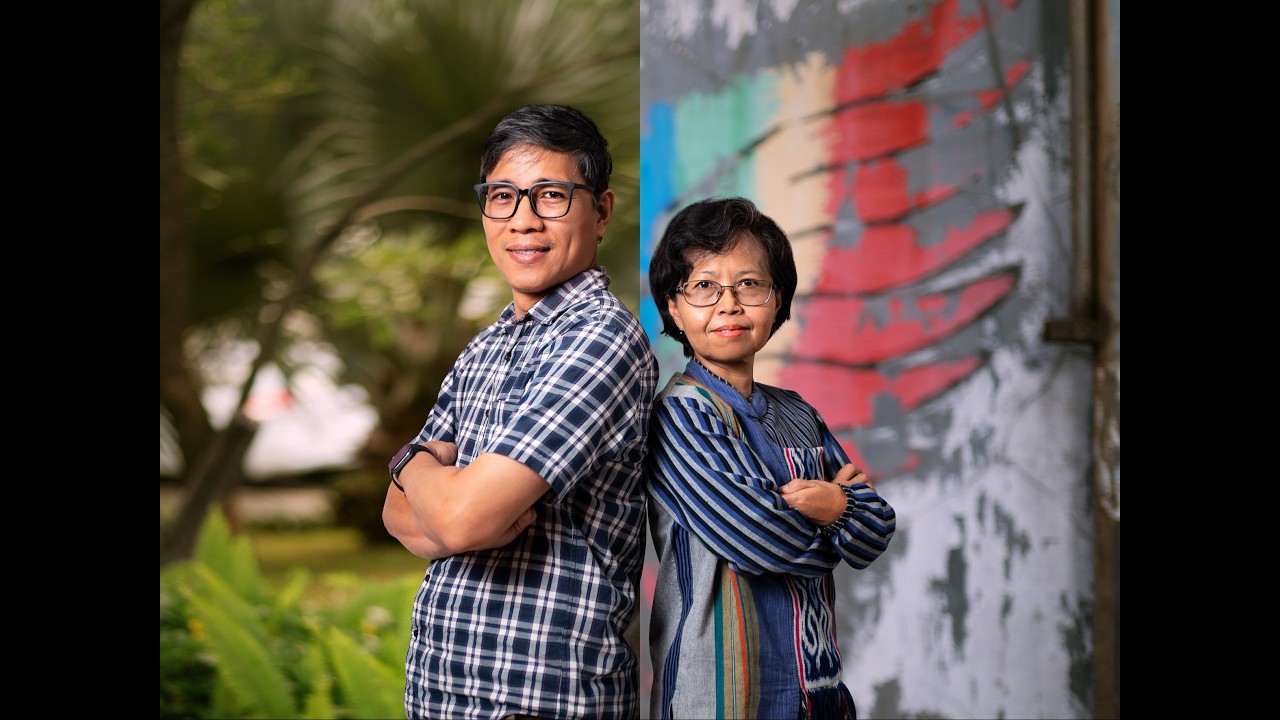
A Muslim psychologist and a Protestant pastor are fighting violence together in Indonesia. Find out more about their work at the Pasundan Durebang Center. (8 min.)
Together against violence: strengthening protection, self-determination and hope
Gender-based and sexualized violence is a reality worldwide. Women and children experience discrimination, oppression and violence on a daily basis. The consequences go far beyond individual suffering: they restrict educational opportunities, make political participation more difficult and increase poverty and social inequality. Together with partner organizations, Mission 21 is committed to empowering those affected by violence, creating safe spaces and bringing about lasting change to patriarchal structures.
Our 2026 campaign focuses on projects in Peru, Bolivia and Indonesia that promote prevention, acute aid and self-determination.
The figures speak for themselves: in Indonesia, around 1.2 million girls are married before the age of 18 every year - often against their will. Many Indonesian women also work abroad as domestic workers, where they are particularly vulnerable to exploitation, abuse of power and sexualized violence.
Show full text
Violence is also part of everyday life for many women in Peru and Bolivia. Femicides, sexualized assaults and state-tolerated violence are on the rise. In Peru alone, over 140,000 cases of violence against women were registered in 2024, including around 29,000 cases of sexualized violence. In Bolivia, more than 11,000 reports of sexual assault were filed in 2023. However, many victims do not receive justice: only a small proportion of cases lead to a conviction.
People who face multiple forms of discrimination - for example due to poverty, disability, racism, experiences of flight or their sexual orientation and gender identity - are particularly at risk.
Together with feminist networks, churches and civil society organizations, Mission 21 is committed to change. Our partner organizations offer shelters, psychosocial support, legal assistance and educational opportunities. They carry out prevention work in schools, villages and religious communities and empower women and girls to claim their rights and live self-determined lives.
Many projects also deliberately involve men. After all, sustainable change can only be achieved if harmful role models are challenged and spirals of violence are broken.
With the 2026 campaign, we invite you to take a look, get involved and become part of a solidarity movement against violence. Together, we are setting an example for human dignity, justice and a world in which all people can live freely and safely.
Support our vision of a just world free from violence.
The power of images and words
Violence is a highly sensitive topic that requires careful reflection. Find out why we deliberately took our time with this campaign and put the focus on people who are driving change.

Calling violence by its name
How do we define gender-based and sexualized violence? What does structural violence mean? And how does the international emergency gesture actually work?

Prevention starts with looking
Equal Opportunities Officer Barbara Heer explains in an interview why the fight against gender-based violence is a task for society as a whole and why traditional images of masculinity need to be questioned.
Together against violence
Become part of the change. Support us in preventing gender-based and sexualized violence and opening up new perspectives.
Protect. Strengthen. Change.
Two voices against violence
In Indonesia, a psychologist and a priest look where others look away. Find out how Taty P. Suandi and Cliff Edward Kasakeyan break taboos together and open up new perspectives for those affected.
Indonesia: Between vacation paradise and harsh reality
The search for work takes many women far away, but often involves the risk of exploitation and violence. Find out how Mission 21, together with local partner organizations, empowers women across religious boundaries and offers reliable support and protection.
Peace of Her Mind Center: A Safe Haven and a New Beginning in South Sudan
In the capital city of Juba, the shelter supported by Mission 21 is breaking the silence surrounding gender-based violence in South Sudan. Learn how affected women are building new prospects for themselves and their country through psychosocial support and economic training.
When a «No» Really Counts
In Bolivia, sexual violence against minors is a widespread problem that is often considered taboo. Learn how long-term, inclusive support helps children and adolescents process their experiences, actively protect themselves, and regain confidence in their own voices.
Peru: Breaking Down Gender Roles, Shaping Change
A writing contest in the Cusco Department encourages young people to actively challenge deeply entrenched machismo and traditional gender roles. Learn how the local women's center «Flora Tristán» helps young people build nonviolent relationships and live in harmony with one another in their daily lives.
Protect the Earth, Strengthen Women's Rights
On the International Day for the Elimination of Violence Against Women, smallholder women farmers in Cusco, Peru, are speaking out. Learn how local women are fighting to protect their natural resources and working together to ensure a safe life free from violence.
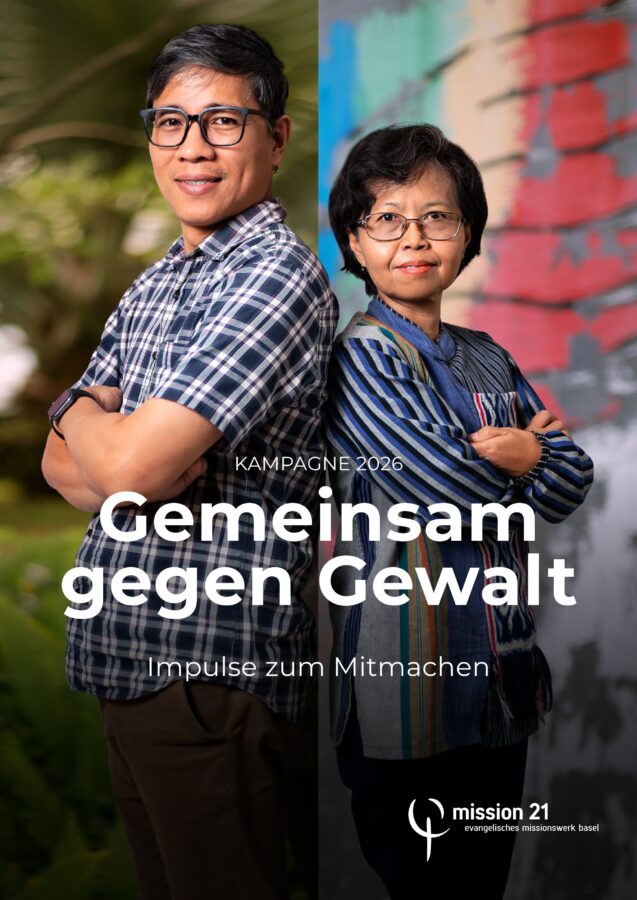
Impulses for participation: The 2026 ideas booklet
Find a wide range of ideas to inspire your work in the parish and beyond. Our idea booklet for the 2026 campaign provides you with the foundation for this year’s theme, «Together Against Violence.» In addition to the idea booklet, we offer you the following on the theme page Impulses for practice specific ideas for classroom instruction, adult education, and worship services.
Discover ideas for real-world application →
You can find help here
Sexualized violence can deeply unsettle women and children - as well as people around them. There are services in Switzerland that confidential, free of charge and on request anonymous support - by telephone, online or in person.
Immediate help
You do not have to provide proof that something has happened. It is enough to let us know that you need support.
Not urgent, but you want guidance? Start here: Find cantonal victim support centers
What you can expect
- You decide how much you want to tell.
- Counseling can be anonymous and free of charge (depending on the service).
- You get help with the next steps - medical, legal, psychosocial.
- Relatives and caregivers can also receive advice.
If you are unsure which position fits: Use one of the instant aids above - they will guide you further.
I am affected
Choose a counseling center (phone/chat) - you don't have to carry this alone.
I support someone
You can accompany, listen and contact help together - without pressure.
It concerns the workplace
Information & contact points on sexual harassment at work.
Advice & contact points in Switzerland
-
Church-Run Reporting Centers for Human Rights Violations
Resources and Support for Cases of Boundary Violations in Church Settings. -
Information Materials for Church Congregations on the Protection of Personal Integrity
Prevention resources and guidelines for maintaining integrity within church structures. -
Equality prevents violence
Information from the national campaign (Confederation) - support, prevention, orientation. -
Women's counseling: sexual violence
Free, confidential advice for those affected - including information on further resources/emergencies (multilingual). -
Victim Support Switzerland - Sexual violence
Rights, next steps and helpful information. -
Victim Support Switzerland - Cantonal contact points
Find the appropriate victim support counseling center in your canton. -
belaestigt.ch - Contact points
Focus on the workplace: sexual harassment at work - overview by canton. -
Victim support for both Basel
Advice & support, incl. chat: online.opferhilfe-beiderbasel.ch -
LGBTIQ Helpline
Telephone & chat for LGBTIQ people - free of charge and confidential.
International (also from Switzerland): 116 006 (victims of crime) and 116 016 (violence against women). Info about 116 006
Discreet help in everyday life
„Ask for Luisa“ (Bars & Clubs)
In participating companies, you can ask the staff for „Luisa“. This is a code word to get support (e.g. escort, organize a cab, safe room).
Example/Info (Switzerland): Luisa is here - Opferhilfe beider Basel
Hand signal for help
- Raise your hand, palm forward, thumb spread apart.
- Fold your thumb into the palm of your hand.
- Place the remaining fingers over it as if you were enclosing the thumb.
Source: aha.li - Emergency hand signals
If you want to support someone
- Listen, take it seriously, don't push.
- Questions: „What do you need now?“
- Offer to contact an office together (telephone or chat).
- Respect the pace and decisions of the person concerned.
Note: This page does not replace medical or legal advice. In acute emergencies: 117.
Young Voices - the podcast for a just world
What motivates young people in Indonesia, Nigeria
or Peru? In the podcast «Young Voices» there is no
prefabricated answers, but real stories. Every month, committed young adults from our international network share their perspectives - unfiltered, critical and full of hope. They discuss peace and justice, creating a platform for transcultural exchange to learn and grow together. An inspiring listening experience in English and Spanish for anyone interested in how the next generation wants to shape the future.
Listening tip for the campaign
In episode #39, Michelin from Indonesia draws an impressive connection between violence against women and the destruction of nature. A strong plea for the protection of life.
Listen and subscribe to the podcast at Spotify, Apple Podcasts, YouTube, Amazon Music.

Against Silence: Protection and Justice in the Face of Violence in Peru
Gender-based violence is a harsh reality in Peru and all too often claims the lives of women and girls. This video documents the unvarnished truth and shows how our local partner organization is taking action.

At the Global Health Catalysts Summit, Rev. Jochen Kirsch (Director of Mission 21) and Dr. Fatima Bio (First Lady of Sierra Leone) spoke about the urgent need to end violence against women and girls worldwide. It was a powerful call for the active promotion of human dignity.

Impulses for your parish
Bring the topics of the campaign into your environment. Discover practical educational dossiers for schools, spiritual impulses for church services and a wide range of working materials for direct download.
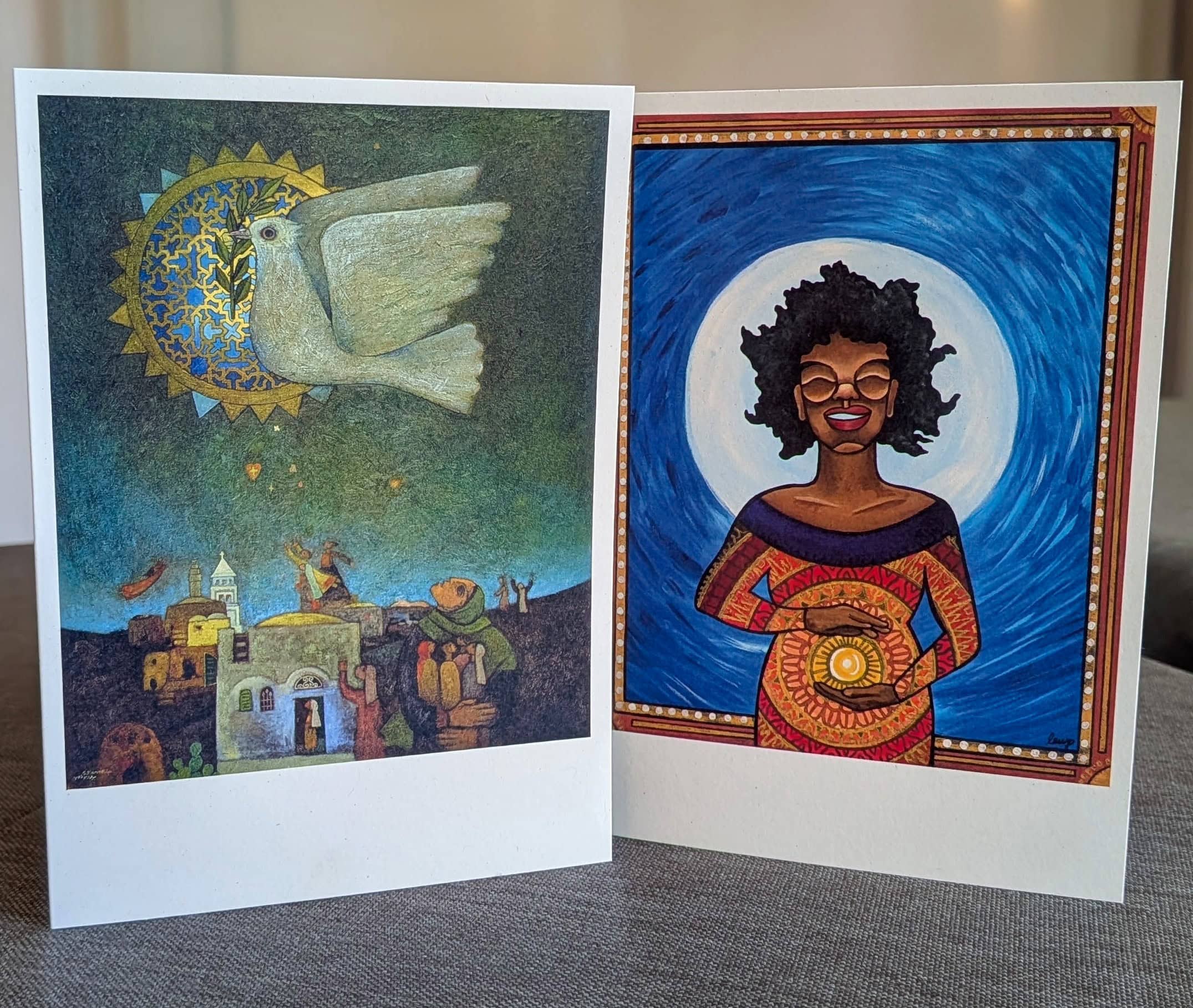
Art Card Set 2026 (Set of 4, including envelopes)
Whether for personal Christmas and New Year’s greetings or warm wishes throughout the year, these two uplifting images bring a sense of solidarity to everyday life. Every purchase supports shelters, psychosocial care, and legal assistance for women and children affected by violence.
Price: CHF 14.90 (set of 4 with 2 designs, including envelopes)

Order a sticker set and do good
Send a visible signal against gender-based violence. Whether on your laptop or smartphone: make the international distress signal known and show solidarity with the free sticker set.
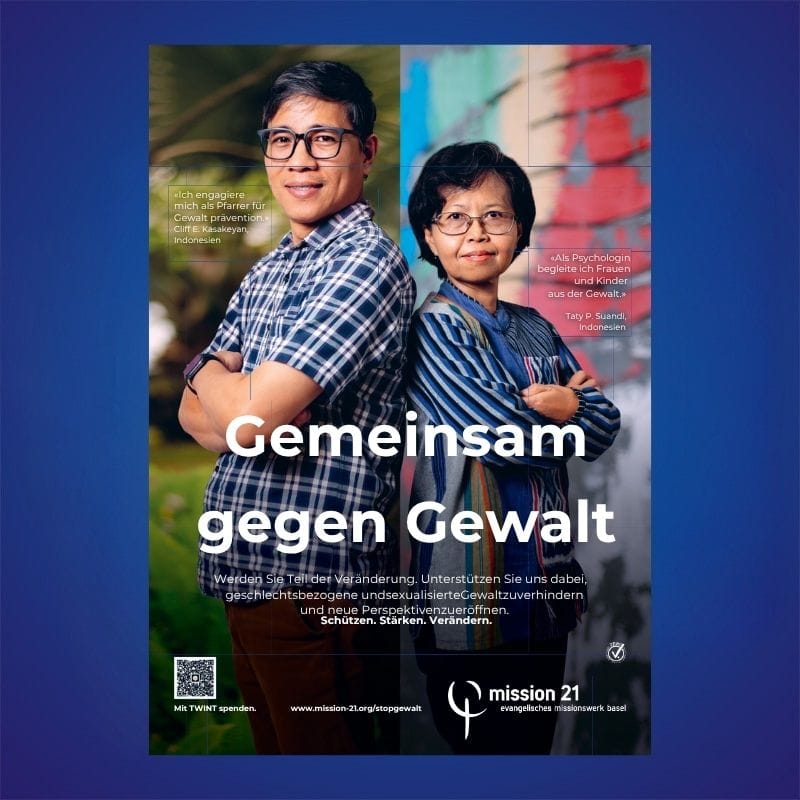
Order campaign poster
Order the campaign poster in A3 format free of charge to raise awareness and support fundraising campaigns.
Courses and workshops
We offer customized formats for your group - from compact workshops and interactive presentations to all-day training and course series. Two examples from our program:
Equal rights for all
In many places, women have fewer opportunities, even though their role is central to sustainable development. How can disadvantaged groups gain their rights?
With courage against hate speech
Thought patterns and language can trigger and intensify conflicts. Try out possible courses of action to recognize hurtful language, communicate non-violently and defend yourself against violence.
discrimination (for example in the digital space)
engage.
All courses and workshops for groups can be found here:
Our campaign newsletter
Let us inspire you. Subscribe to our campaign newsletter, which will provide you with new ideas, background information and exciting campaigns on the current topic right through to Advent.