Impulses for practice: Together against violence
Gender-based and sexualized violence is widespread worldwide - increasingly also in the digital space. Educational institutions such as schools and parishes have a special responsibility in terms of prevention, empowerment and the creation of safe spaces - also in Switzerland. A conscious commitment to protection and human rights requires orientation, knowledge and practice. Our educational programs provide you with trauma-sensitive approaches and ideas for teaching and adult education.
How to talk to children and young people about violence?
The educational approach to the topic of violence is extremely relevant. A trauma-sensitive and age-appropriate approach within a protected learning environment is crucial.
- Information and reflection: Learners receive factual information on various forms of violence and have the opportunity to ask questions and reflect on social contexts.
- Strictly voluntary: Personal experiences may be shared, but participation must always remain voluntary.
- Mindful leadership: Teachers are required to listen carefully, not to push and to take boundaries seriously.
- Joint solutions: The aim is to create a climate of trust in which violence is named, recognized as an injustice and concrete prevention and action options are worked out together.
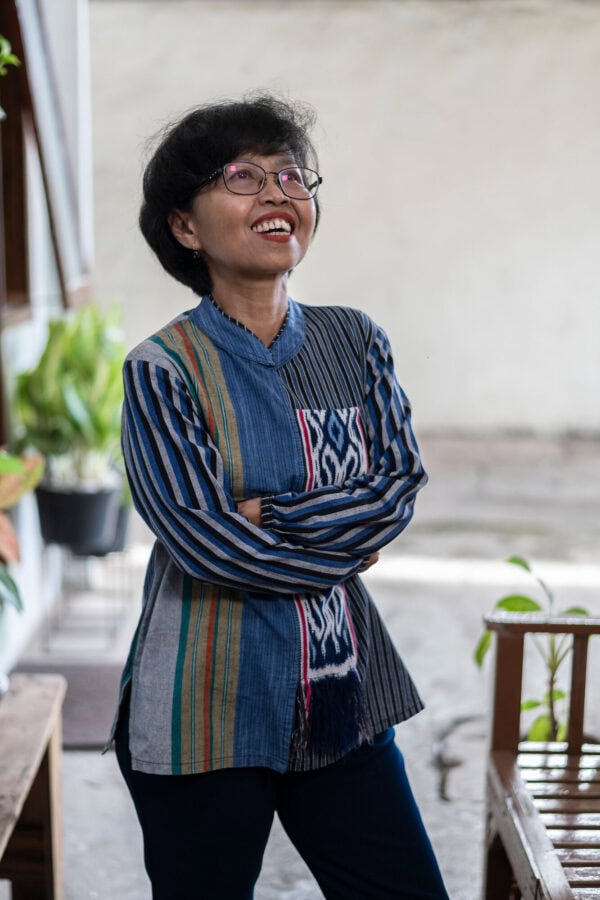
Photo story: A place for new hope
Taty P. Suandi is a clinical psychologist on the Indonesian island of Java. In a photo story, she takes us into the Pasundan Durebang («my sister's house») of the Protestant Pasundan Church.
The pictures give an insight into their work and their commitment to combating violence against women and children. We see places of peace and protection, such as a small room in the center in Bandung, and learn about the motivating power of small gestures - such as the encouraging messages on the pinboard.
A lesson: Stop violence
The «Pasundan Durebang Center» project is well suited for a teaching unit on «Overcoming Violence» at secondary school level, but also in cycle 2 at primary school level. A 90-minute interactive lesson could comprise three steps:
- Indonesia and the center - a search for clues: The young people collect quiz questions about a fascinating country and get to know the Durebang Center in Bandung through a photo story.
- Stop the violence - what can we do? Using the story of psychologist Taty P. Suandi and two simple gestures (the defensive and the supporting hand), the young people discuss what support people affected by violence need.
- Support after stressful experiences: The young people exchange concepts, images and a biblical story that can help them in critical situations.
Women's rights and social change
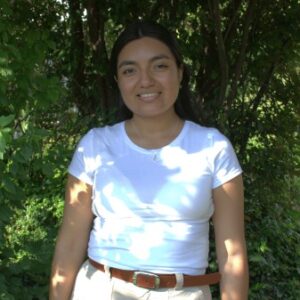
Sociologist Raysa Díaz Romero works in Peru for Flora Tristán, a partner organization of Mission 21 that fights for women's rights and against violence. Find out in this interview how a young generation is shaping social change. For Raysa Díaz, one thing is clear: «If you are a feminist, you want to change the world».
For more in-depth information, three impressive short documentaries are available that shed light on the context of Flora Tristán's work and the current social challenges:
- Social protests for gender equality and democracy in Peru (10 min.)
- Legal advice for victims of sexualized violence at Flora Tristán (17 min.)
- The truth will come to light - Bolivia context (11 min.)
Educational Ideas: Women's Rights and Social Change (PDF)
Resource Dossier: Interview with Raysa Diaz (PDF)
Spiritual impulses for church services and devotions
Address the issue of overcoming violence and oppression in your church service. Image meditations, Bible interpretations and prayers offer inspiration from partner churches and partner organizations for the protection and empowerment of people.
Image meditation: The Magnificat

Timur Indyah Poerwowidagdo, Magnificat I (2009)
A woman in a red dress takes over the room: she stretches her arms wide in a dance-like movement. She has removed her blue shawl from her shoulders and spread it out like a sail. She unfolds her dance and her song upright. It is Mary, the mother of Jesus, singing her Magnificat.
The picture by Indonesian artist Timur Indyah Poerwowidagdo (born 1941) illustrates where Mary draws her momentum and strength from. The artist makes this visible through a symbol: a red spiral. Mary recognizes a light that rises for her like the sun. She walks a path that opens up before her like a path out of a labyrinth.
God's promise stands over her life like a halo. In a circular movement, she feels God's power. She leaves the stagnation behind her, the rigidity dissolves, because with God's support, the structural power relations change.
Mary confidently enters the future and takes her place: «My soul praises God, and my spirit rejoices in God, my salvation, for God has seen me and my situation.» (Luke 1:46-48)
A new reading of the Bible
Feminist theology links biblical texts directly with today's reality and the global commitment to combating structural and domestic violence.
- Mary and Martha: Ruth Vindas from Costa Rica reads Luke 10:38-42 against the background of experiences of violence in Latin America.
- Jacob's battle at the Jabbok: Ira Imelda from Indonesia combines the story from Genesis 32:23-33 with her commitment to combating violence in her home country.
Prayers and songs: voices from around the world
«My parents taught me as a child that you, God, exist. I never saw you, but their faith told me that you know me and know what I'm going through.
Now it's just me and you. I don't know what will happen tomorrow, tonight, in an hour, not even in a few minutes. I know that I am very afraid of everything and everyone ...»
This prayer gives an insight into the experiences of a young woman in a foreign country and comes from the Basel prayer book «You know who we are». It also contains touching prayers from Ethiopia, Myanmar, Colombia and many other countries.
Interreligious dialog: The live talk for conf groups
Respect and peaceful encounters between religions are a strong basis for preventing conflicts and violence. Bring this dialog into your classroom in an interactive and authentic way: Our Swiss Youth Ambassadors Nina and Rahel took part in the «International Youth Interfaith Camp» in Indonesia. In a free, 20-minute live talk, they report directly to your conf group about their experiences and answer the young people's questions. Through this joint dialog, prejudices can be broken down and it becomes tangible why peaceful coexistence across religious boundaries affects us all.
«The diversity I experienced at the camp encouraged me to be more aware of differences. It has become even more important to me to listen to other perspectives openly and to represent my own views at the same time.»
- Nina, Youth Ambassador
«So many young people in Indonesia are actively involved in interfaith dialog. In Switzerland, the coexistence of different religions is just as topical - but hardly an issue among young people.»
- Rahel, Youth Ambassador
All materials at a glance
Here you will find all additional downloads and worksheets related to pages 12 through 14 in the 2026 Campaign Idea Booklet.
Ideas booklet page 12:
Ideas booklet page 13:
Together against violence« campaign»
← Back to overviewTogether we can overcome violence: Donate now