
Latin America, Bolivia, Peru, Education
Water extraction in the Andes: Adaptation to climate change
Project Number: 400.1022
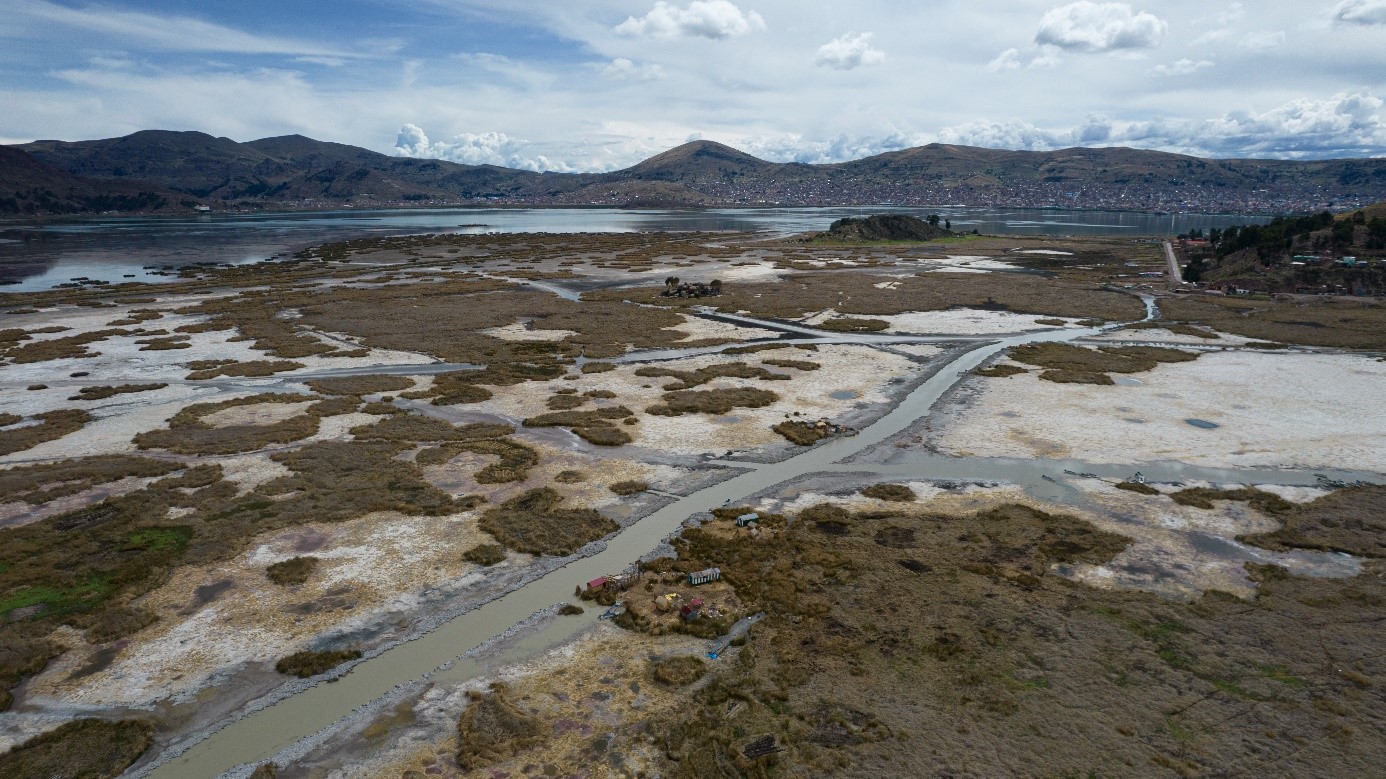
The climate crisis is exacerbating the water crisis in many places and putting smallholder households in the Bolivian and Peruvian Andes under increasing pressure. Both the cultivation of sufficient food for self-sufficiency and feed for livestock is at risk due to a lack of water availability. As a result, sales of the associated alpaca wool and knitwear are also at risk of collapsing.
With our project work in the area of water harvesting in the Andes, we support smallholder households in dealing with climate change. Our aim is to improve the skills of smallholder families in water harvesting in order to adapt to climate change. To this end, our partner organizations impart important knowledge in the field of water management, for the construction of water retention basins and new water seepage pits as well as reforestation with local tree and bush stands on the banks of selected streams and river beds. Our partner organizations thus make an important contribution to replenishing water reservoirs and work together with both smallholder households and elected representatives of indigenous communities.
In addition to targeted work on water catchment strategies, it is also important to raise awareness among the general public and the responsible authorities in order to promote commitment to the protection of water bodies and the unique Andean wetlands.
Background information
In the context of climate change, extreme weather events such as drought and prolonged extreme cold, which leads to frost, are increasing in intensity and frequency. This also presents people in the Andes with major new challenges. While smallholder households could still count on five to six months of rain 20 years ago, today the figure is just four to five months.
Glaciers as water sources are also declining drastically. According to the authorities in Bolivia and Peru, the glacier retreat in the project region of the departments of Cusco and Puno (Peru) and La Paz (Bolivia) is between 70 and 90 percent. Important rivers are thus losing their most important water reserves and carry little water in the dry season, which makes supply and agriculture more difficult.
There is a great need for action, as over 90 percent of smallholder farming families in these departments have no technical irrigation infrastructure. They are dependent on acquiring new knowledge and methods in the field of water management and working with micro-irrigation methods. The Lake Titicaca region in particular is facing a serious crisis that is jeopardizing the water supply for almost three million people in Bolivia and Peru. A large part of the population is of indigenous origin. Aymaras and Quechuas are particularly well represented.
Project goals
Together with its partner organizations, Missi-on 21 supports smallholder households in acquiring knowledge and skills in the field of water management and in setting up water retention basins and micro-irrigation systems. Water harvesting strategies such as reforestation and the planting of Andean grasses and mosses are also intended to increase the water storage capacity of the surrounding ecosystems.
Target group
The activities are mainly aimed at smallholder indigenous communities in rural areas. Women play an important leadership role, as they are permanently present on the ground and play a key role in agriculture. However, the educational programs and all project activities relating to water extraction are open to all interested parties who wish to participate and expand their knowledge.
Activities
- Imparting skills and knowledge in the field of water management
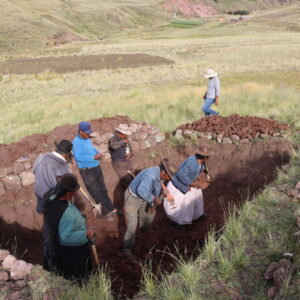
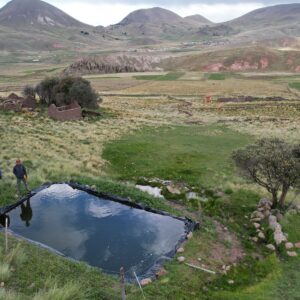
- Construction of water retention basins and natural seepage pits on slopes
- Reforestation and planting of shrubs along strategic areas such as water source areas, river beds and wetlands
- Installation of micro-irrigation systems for the cultivation of food crops
- Imparting knowledge for dealing with enforcement authorities and about basic rights in water use
Project progress
Prodiasure
In 2025, our partner organization supported municipal water authorities, which played a leading role in implementing measures for water extraction and adaptation to the effects of climate change. These included reforestation campaigns and construction projects: infiltration ditches, terraces, and retention basins. For example, a circular concrete basin with a capacity of 70,000 liters of water was built. The water is used by families for agroecological production as well as for daily consumption.
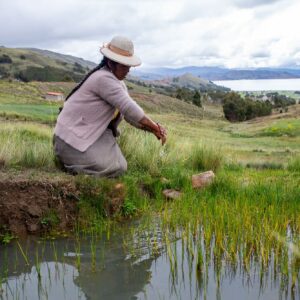
In the community of Copacati, Aymara women have taken on a leading role in integrated water management efforts and are actively involved in promoting and implementing water harvesting practices in their community. They are also active members of the network of female water monitors for Lake Titicaca—and the network’s president, who leads and promotes efforts to care for Lake Titicaca, is one of them.
Machaqa Amawta Foundation
In 2025, the FMA Foundation supported the residents of the Macamaca community in setting up and continuously improving an irrigation system. As a result, approximately 370 people gained access to water. In addition, the level of technical knowledge in the community was assessed, and project participants received training on sustainable practices in water use and reforestation. Social capacity-building was also important: to ensure water management is supported by jointly agreed-upon arrangements and decisions.
This improvement to the irrigation system, carried out as part of a collaborative process, also improved conditions for food production and income generation. Throughout this process, women and men were recognized as equal partners in developing solutions for the common good. Through training, the community also raised awareness of the importance of protecting natural springs in the Lake Titicaca watershed. This is because these springs replenish groundwater and supply the lake with fresh water.
This film by our partner organization IDECA is about coping with climate change in the highlands.

Partner
- FMA, Machaqa Amawta Foundation
- FOCAPACI, Center for Education and Training for Citizen Participation.
- PNS, Plataforma Nacional de Suelos
- CEDEPAS, Ecumenical Center for Social Promotion and Action
- IDECA, Institute for the Study of Andean Cultures
- CMP, Centro de la Mujer Peruana Flora Tristán
- CBC, Centro Bartolomé de las Casas from Cusco
- Fundación Prodiasur
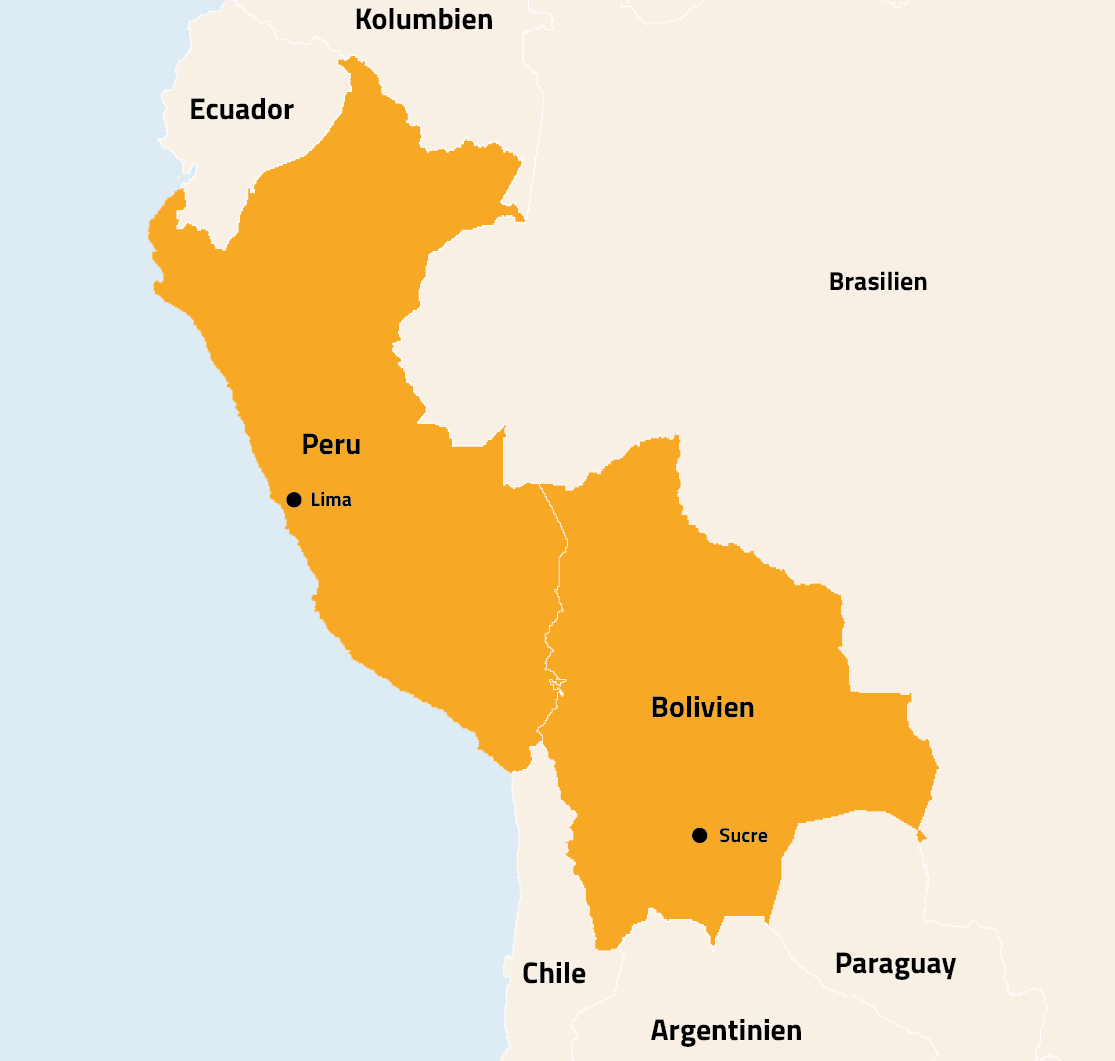
Bolivia
11.3 million inhabitants (2024)
36.4 % live below the poverty line (2023)
Peru
34 million inhabitants (2023)
33 % live below the poverty line (2023)
Current project budget 2026
CHF 38'000