Young people from Peru share stories about new forms of masculinity
With the goal of continuing to help address the structural causes that limit democracy and the rights of women and young people, the Peruvian Women’s Center «Flora Tristán» has launched a groundbreaking initiative. In rural areas of the Lamay district (Calca), young people at two schools are being supported in critically examining traditional gender roles and promoting nonviolent models of masculinity.
At the heart of this initiative was the storytelling contest «We Shape Change: Youth for Equality and Nonviolence,» which took place at two educational institutions in the city of Lamay in the department of Cusco. The initiative aimed to encourage participants to reflect on new forms of masculinity in order to build equitable relationships between women and men.
«We want to creatively spark a shift in conventional ways of thinking. This enables young people to develop an awareness of the positive effects of eliminating machismo—for a life with more joy for themselves and free from gender-based violence,» explained Elena Villanueva, director of the rural development program at the feminist organization that is organizing the competition.
A Process for Real Change
The initiative is designed as a long-term process and is part of the project «Advancing Political and Economic Autonomy and the Exercise of Civil Rights for Rural Andean Women in Calca (Cusco) in the Face of the Food and Climate Crisis.» This important local initiative is supported by an international alliance: In addition to financial support from the Basque Agency for Cooperation and guidance from the organization Mugen, Mission 21 serves as a reliable partner organization to sustainably strengthen and promote these processes.
A total of about one hundred young people participated. Through this process of information, awareness-raising, and active involvement in developing solutions, they were empowered to challenge machismo. In this way, they are actively contributing to changes that promote peaceful coexistence within their families, interpersonal relationships, and communities. Each young person presented a personal account of their own experiences related to machismo, as well as their expectations and suggestions for modeling partnership-based ideals of masculinity.
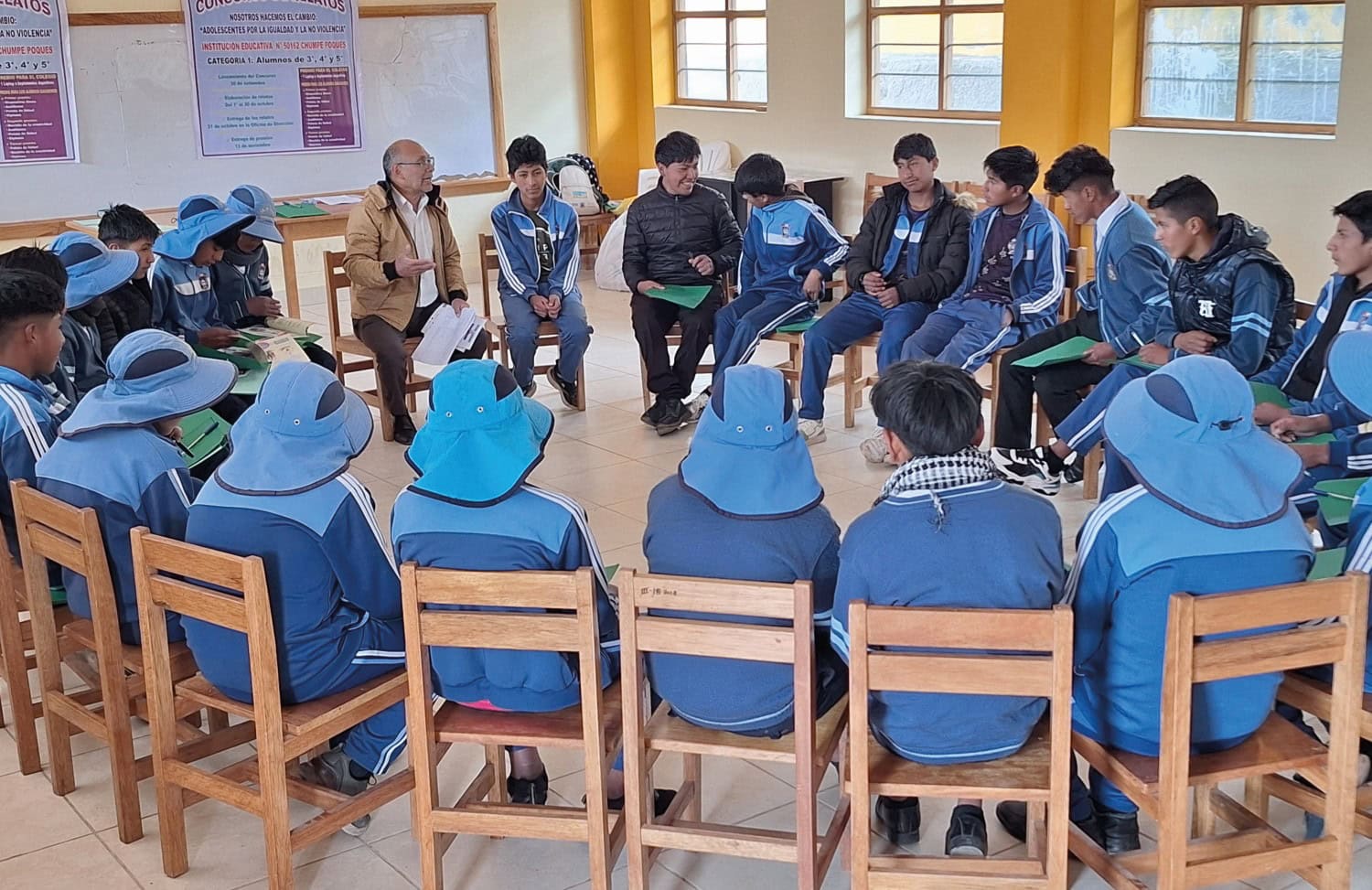
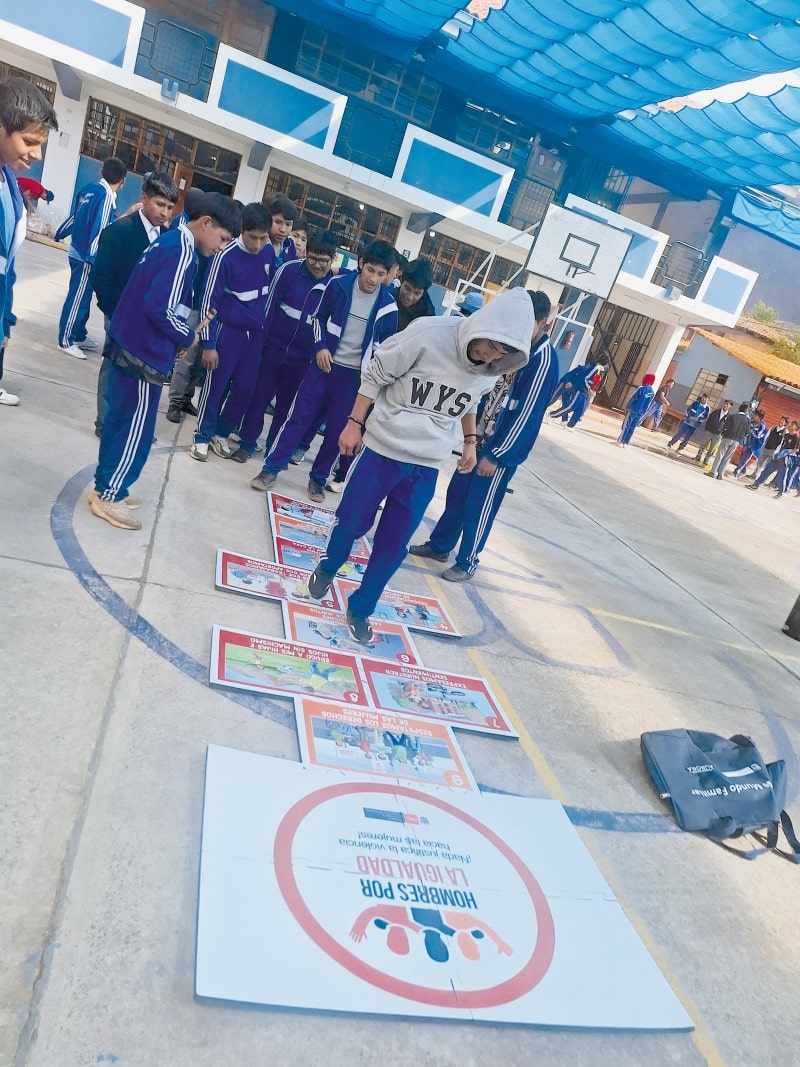
In Calca, young people are critically examining traditional gender roles through interactive workshops and playful activities. Photos: Jesusa Medrano
Breaking Down High Tolerance for Violence
«It is important to advocate for the empowerment and recognition of women’s rights in rural areas while also raising awareness of alternative forms of masculinity. This differs greatly from the current model, which is characterized by a dominant role vis-à-vis women. With this in mind, we are developing measures for various target groups, such as young people, local smallholder farmers and artisans, as well as government agencies and municipal officials,» the expert explained.
Official figures show just how urgently this work is needed on the ground: According to the latest National Survey on Social Relations (ENARES), Cusco is one of the departments with the highest levels of tolerance toward gender-based violence. There, for example, 66 % of men over the age of 18 justified rape—a shocking figure that is 10 percentage points higher than the already high national average of 56 %.
More from the 2026 campaign
When a «No» Really Counts
In Bolivia, sexual violence against minors is a widespread problem that is often considered taboo. Learn how long-term, inclusive support helps children and adolescents process their experiences, actively protect themselves, and regain confidence in their own voices.
Indonesia: Between vacation paradise and harsh reality
The search for work takes many women far away, but often involves the risk of exploitation and violence. Find out how Mission 21, together with local partner organizations, empowers women across religious boundaries and offers reliable support and protection.
Together against violence« campaign»
← Back to overviewTogether we can overcome violence: Donate now