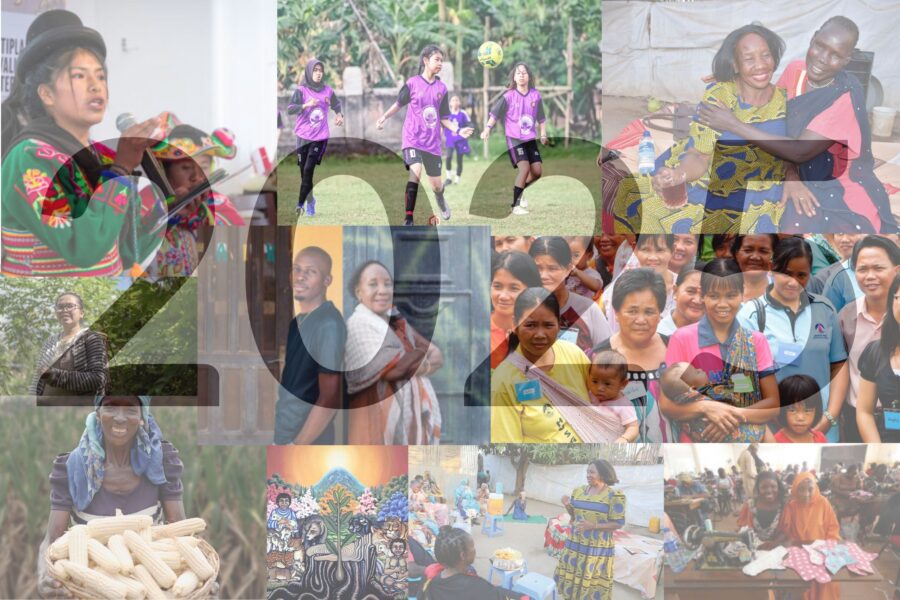

Latin America, Latin America
Strong civil society for sustainable development in Latin America
Project Number: 400.1400
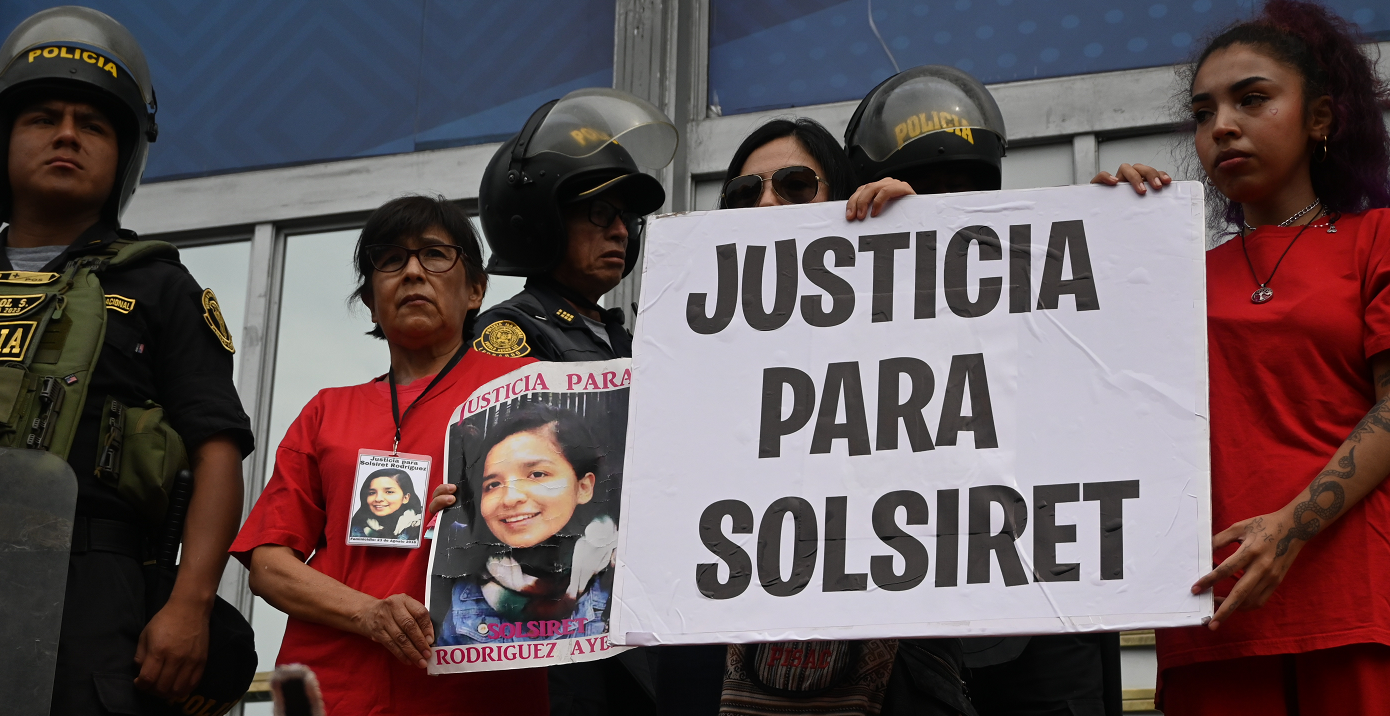
The partner organizations are strengthened through targeted training so that they become actors that work transparently, efficiently and responsibly. In this way, Mission 21 promotes their influence as opinion leaders in civil society and creates strong institutions and leaders that can bring about sustainable change. The focus is on workshops on the topic of "artivism", for example: this approach uses the combination of art and social action in public spaces as a means of drawing attention to the environmental crisis or the undermining of political rights in a creative and peaceful way
Background information
Reports on the rule of law by the World Justice Project in Latin American and Caribbean countries show authoritarian tendencies and widespread mistrust. The majority of people in Latin America and the Caribbean believe that their government uses disinformation to influence public opinion in their favor. At the same time, new surveys on authoritarianism and democracy show a widespread conviction that leading government representatives are trying to attack and weaken important control mechanisms of the executive.
In the Andean countries (Bolivia, Colombia, Ecuador and Peru), 50-75 percent of people believe that government officials exhibit authoritarian behavior. Compared to the last year of data collection, more people believe that local government officials are not elected through a clean process. In addition, more than two-thirds of respondents doubt that high-ranking officials would be held accountable for violations of the law. In such an environment, there is a need for solid partner organizations that can still effectively advocate for disadvantaged people in an increasingly authoritarian environment. People whose livelihoods are threatened by climate change and a lack of water protection, who have limited access to formal education or who are affected by gender-based violence.
Project goals
The aim of this project is to strengthen Mission 21's partner organizations so that they can work transparently, effectively and sustainably in civil society. The aim is for the partner organizations to exert an even more targeted influence on political decision-makers and develop effective measures to shape public opinion.
Target group
Project managers and employees in Mission 21's partner organizations.
Activities
We promote the exchange of knowledge among partner organizations and facilitate training on innovative methods for political lobbying and awareness-raising work. The most important activities include
- Artivism" workshops: This approach uses the combination of art and social action in public spaces as a means of drawing attention to the environmental crisis or the undermining of political rights in a creative and peaceful way.
- Knowledge exchange on strategies for dealing with gender-specific violence against indigenous women and legal advice.
- Exchange of knowledge on approaches to how men and boys can develop positive images of masculinity.
Project progress
In 2025, the two partner organizations, Alfalit and Cedepas Perú, conducted training sessions for their teams on the prevention of sexual exploitation, abuse, and harassment. These partner organizations were selected because they work in rural regions with indigenous populations. This often requires a specific approach to the issue, and the necessary protective services are not as easily accessible as they are in urban settings.
Project coordinators, technicians, and educators were also trained on the protective measures they must take if they encounter cases within their organizations and/or within their project among project participants. The training sessions were developed by CEDEP, an organization with extensive experience in prevention work in rural settings.
To empower women for social participation, we held workshops and discussion sessions with our partner organizations and other stakeholders. The goal was to strengthen the process of defending Lake Titicaca and its tributaries. Women’s networks working to protect the lake received legal support in submitting a landmark regional ordinance to recognize Lake Titicaca as a legal entity. Thanks to the support of our partner organization, the Centro Bartolomé de las Casas (CBC), and the Institute of Legal Defense (IDL), the ordinance was ultimately adopted by the regional government. This is an important step: The ordinance is based on an ecocentric approach, meaning that the lake is not merely viewed as a resource, but its intrinsic value is recognized. This makes it possible to demand water protection measures in a legally binding manner.
A total of 2,025 people took part in these project activities organized by our partner organizations and supported by Mission 21.
Partner
- AETE, Evangelical Theological Education Society
- ALFALIT in Peru
- CBC, Centro Bartolomé de las Casas from Cusco
- CEDEPAS, Ecumenical Center for Social Promotion and Action
- SASP, Andean Seminar San Pablo
- CMP, Centro de la Mujer Peruana Flora Tristán
- Emaús, Center for Spirituality
- IDECA, Institute for the Study of Andean Cultures
- FOCAPACI, Center for Education and Training for Citizen Participation.
- FMA, Machaqa Amawta Foundation
- PNS, Plataforma Nacional de Suelos
- DEI, Ecumenical Research Department
- UBL, Latin American Bible University
Project images

Latin America
663 million inhabitants
27% are affected by poverty
39.1% are affected by poverty in rural regions (Source: CEPAL 2024)
Current project budget 2026
CHF 82'000