

Samuel Imbach
Team Leader and Program Manager Asia
Tel. 061 260 23 46
► E-mail
Project Number: 200.1010
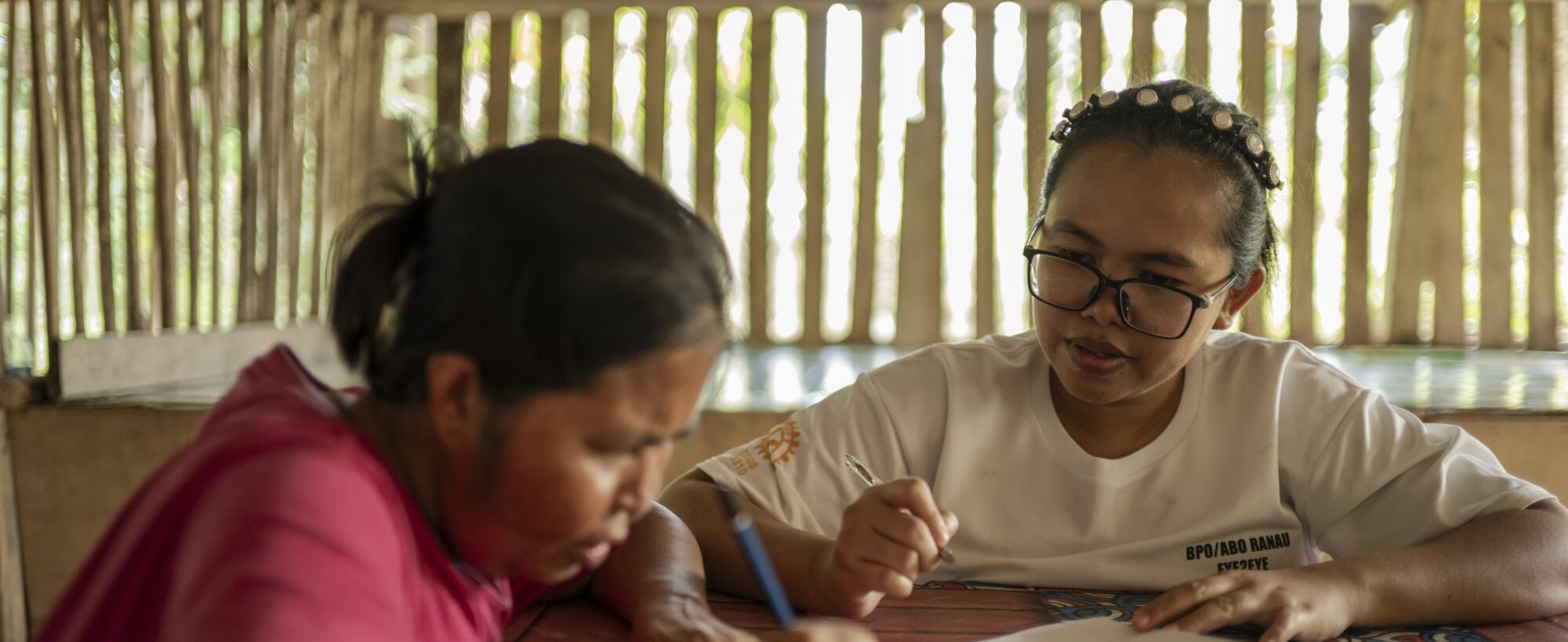
Pastors and community leaders in Asia are important actors on the path to more peace and justice. They are persons of trust who often enjoy more recognition in the communities than representatives of the state. The quality of their education and training is therefore at the heart of this project. Teaching and practice at theological educational institutions should prepare students to deal with the challenges facing their communities - such as land grabbing, discrimination against minorities, gender inequality and restrictions on the free practice of religion.
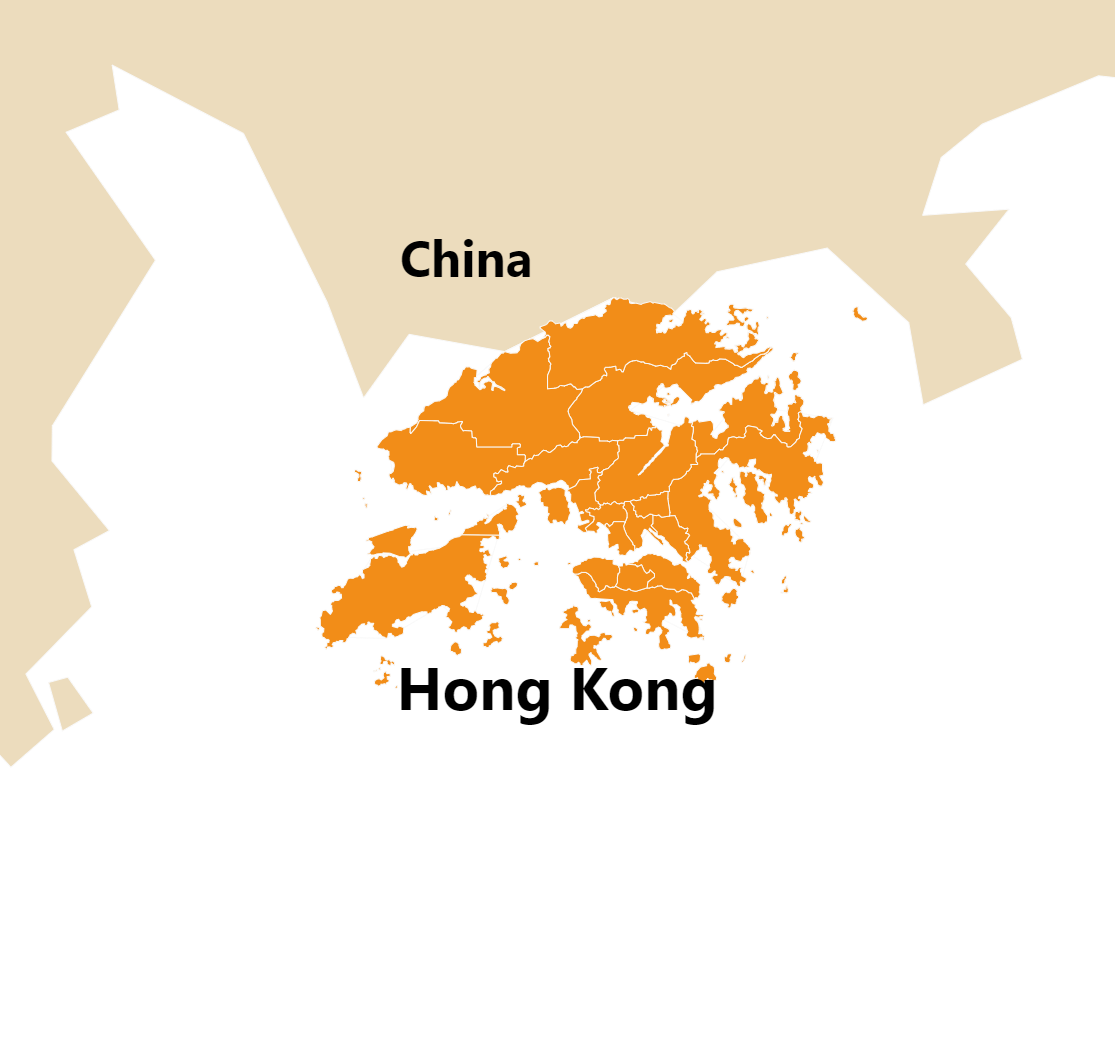
Although the state guarantees religious freedom, ethnic and religious minorities in Indonesia repeatedly experience restrictions, which leads to conflicts in everyday life. In Malaysia, Islam enjoys political priority as the state religion, although the society is religiously and ethnically heterogeneous. In the state of Sabah, 69.6% of the population are Muslim and 24.7% are Christian. In the project area in Sabah, the indigenous Christian minority feels disadvantaged. Political opportunism and a lack of rule of law prevent disadvantaged people in both countries from gaining their rights. In Hong Kong, the People's Republic of China has massively restricted democratic rights such as freedom of assembly, freedom of expression and freedom of choice in recent years. Countless democracy activists and critical journalists have been physically threatened and imprisoned. State control over all areas of life, including church work, is steadily increasing and has led to an atmosphere of fear and self-censorship.
The major churches and church-affiliated organizations in Indonesia advocate for contextual theology (also known as transformational or liberation theology): They emphasize the challenges of the here and now, as opposed to promises of the afterlife that ignore the pressing problems currently facing society. All of Mission 21’s partner organizations are involved in transformative processes that raise awareness of current social realities, develop new context-based theological perspectives, and call for action within their communities.
Many of today’s so-called „agents of change»—including many women—are former participants in Mission 21’s programs and have since assumed leadership roles in churches, educational institutions, and church organizations. Theologically trained professionals are able to develop new perspectives for gender-equitable church policies and new theological curricula that address pressing but long-overlooked issues in society. Contextual theology forms the basis for interreligious dialogue and concrete, practical cooperation across religious boundaries to jointly address challenges.
The well-attended seminars and lectures covered specific pressing issues such as climate change, social violence and trauma, as well as gender roles and power dynamics. In-depth information was also provided on tradition and LGBQTIA+, ecclesiology, interfaith relations, and freedom of expression. Numerous participants confirmed that fostering a sustainable dialogue within the church and society requires further efforts encompassing the levels of discourse, doctrine, and practice. This is because the topics of the seminars and lectures remain controversial in society and can therefore potentially lead to conflict. Theological education, in the sense of training future social leaders, can play an important role in this regard.
Grassroots communities and groups in civil society are strengthened to be able to shape their lives in a self-determined and independent way and to actively contribute to social processes. The church and other civil society contact persons have a key function in this: By teaching a contextual theology that reflects current social and ecological challenges and relates them to practice, the students and future pastors are enabled to more effectively enter pressing social problems.
The primary target groups of this project are the students as well as the leaders and teachers of theological training institutes. As prospective pastors or other active people, the students will later become important "agents of change" and leaders in the church and society who work for peace, social justice and the integrity of creation in their environment. The attitude they learn during their studies has a decisive influence on the impact of church and social development programs. In this way, the training centers, the theological associations and the publishing house make a concrete contribution to a peaceful society based on solidarity. Indirect participants are church congregations, academic communities and political decision-makers in churches, science and society.
Direct project participants: 2,429
Indirect project participants: Around 8,300
In 2025, the partner organizations further deepened contextual theological education and continued the multi-year process of more closely linking academic learning with practical engagement in the congregations. With support from Mission 21, they produced brochures, organized courses and public discussions, and thereby encouraged students, faculty, and committed church members to translate theological reflection into social action—for example, through interfaith cooperation or church engagement tailored to the local context.
Project monitoring reveals that more people participated. These participants reported that they also became more actively involved in social and political processes. Surveys also show that the content learned is increasingly being shared in local forums, community dialogues, and thematic initiatives.
Several institutions implemented structural improvements, including curriculum adjustments, steps toward institutional accreditation, and the expansion of contextual publications. Many theological schools also developed or implemented guidelines for the prevention of sexual abuse, sexual exploitation, and harassment (PSEAH). They also established corresponding task forces, which enabled them to embed protection standards more firmly within their institutions.
Our partner organizations brought educational opportunities to local communities: They offered community-based theological continuing education and other flexible learning formats for women, working adults, and others in remote regions. This allowed them to participate in learning opportunities without leaving their communities—a key component in fostering „Agents of Change.“.
Feedback shows, that the participants are more involved in Self-confidence, analyticalr Strength won and a higher Readiness showed, to address issues such as environmental justice, gender equality, and religious freedom. Several study groups were initiated in addition, the first elements of collective participation and organized public discussions or collective actions.
Podcast on the topic of Christians in China
The number of Christians in China is growing rapidly. The officially registered churches are flourishing, and there are also congregations that are beyond the control of the state. The state is trying to control the churches and at the same time is afraid that the loyalty of Christians will shift away from the party and towards religion. Brandner also explains how the Bible gains relevance when it speaks into a world characterized by repression, and he explains why Christianity is not a Western religion, but a global one.
Interview: «I may be unabashed about making mistakes»
▶ An interview with Tobias Brandner, a prison chaplain in Hong Kong and staff member of Mission 21, published in the journal «Seelsorge & Strafvollzug» No. 16.
CHF 379,000
Mission 21
Protestant Mission Basel
PO Box 270
Missionsstrasse 21
4009 Basel, Switzerland
Tel.: +41 (0)61 260 21 20
info@mission-21.org
Donation account Switzerland:
IBAN: CH58 0900 0000 4072 6233 2
Tax exemption number:
CHE-105.706.527
Donation account Germany:
Savings Bank Lörrach-Rheinfelden
Swift BIC: SKLODE66
BLZ: 683 500 48
IBAN: DE39 6835 0048 0001 0323 33
Account No. : 1032333