Fasting - more than renunciation
A personal approach from a Muslim perspective
by Betül Cam, Head of Communications Mission 21
When we talk about fasting, many people first think of renunciation: no food, no drink, rules, discipline. But fasting is much more than that. In many religions and spiritual traditions, it is a conscious pause, an invitation to take a fresh look at yourself, your own values and your relationship with other people.
My own relationship with fasting is characterized by diversity. I grew up in a household with an Alevi father and a Sunni mother. Neither of them fasted themselves, but they introduced my two sisters and me to both faiths as a matter of course. Religion was never a compulsion for us, but knowledge, history and attitude. Perhaps this is exactly where my current view of fasting came from: open, searching, connecting.
Fasting in Islam and beyond
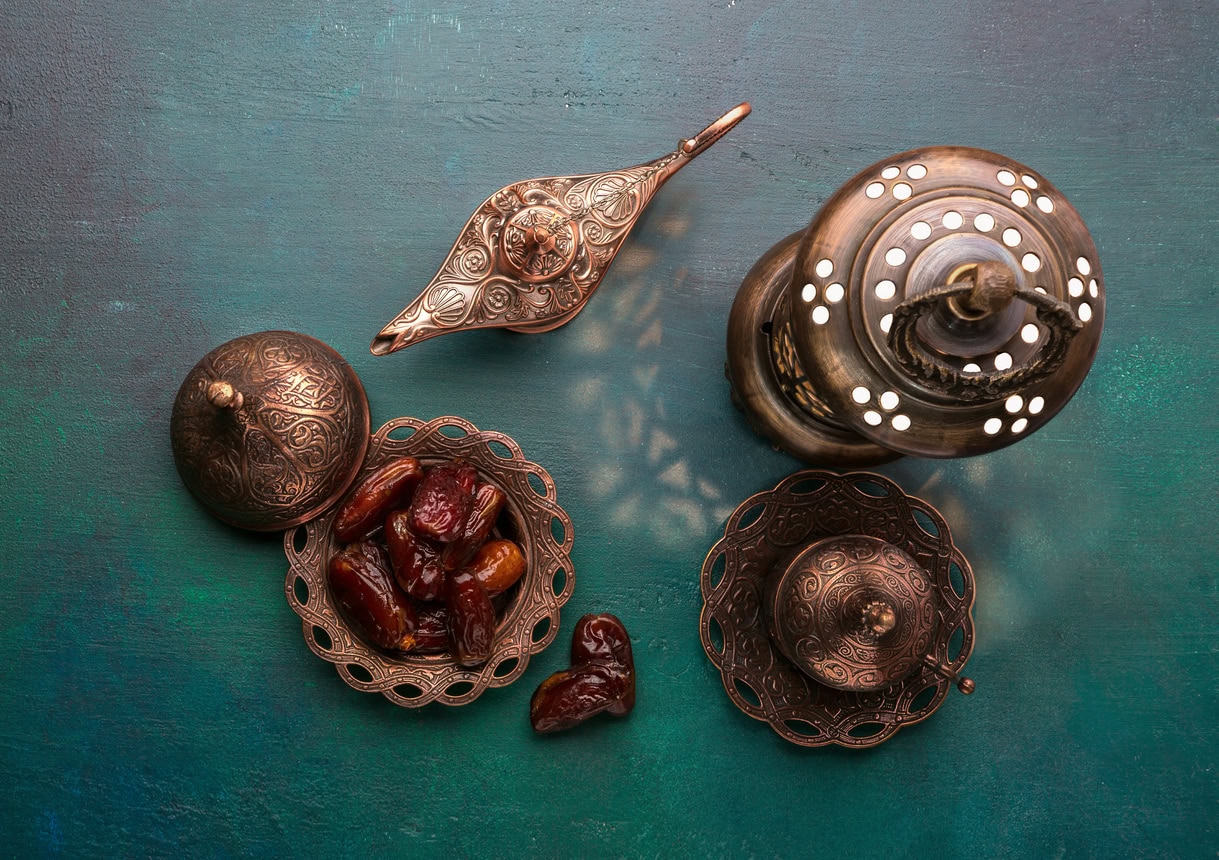
The fasting month of Ramadan is central to Sunni Islam. It is a time of inner reflection, solidarity with those in need and conscious self-discipline. The focus is not only on eating and drinking, but also on one's own behavior. How do I talk to others? How do I treat myself? What do I leave out and what do I allow?

I had my first conscious experience of Ramadan during my studies in Germany. My fondest memories are of breaking the fast together after sunset. Students from different countries came together to wait for the moment when the fasting day ended. The meal was carefully prepared evening after evening and shared in an almost festive atmosphere. Eating was not a by-product, but a sensual ritual that brought people together. This communal iftar, as the breaking of the fast after sunset is called, is particularly important during Ramadan. It creates closeness, community and a deep feeling of love and gratitude.
In the Alevi faith, fasting has a different form and meaning. The best known is the twelve-day Muharrem fast, which commemorates the suffering and death of Imam Hüseyin. His martyrdom in the Battle of Karbala is regarded as a symbol of justice and sacrifice. It is quieter, carried by grief, compassion and collective remembrance. Here, too, it is not just about physical renunciation, but about a moral attitude, empathy and an awareness of injustice. These different forms of fasting have taught me that there is no one fast. But there is a common essence.
 An interreligious language of pause
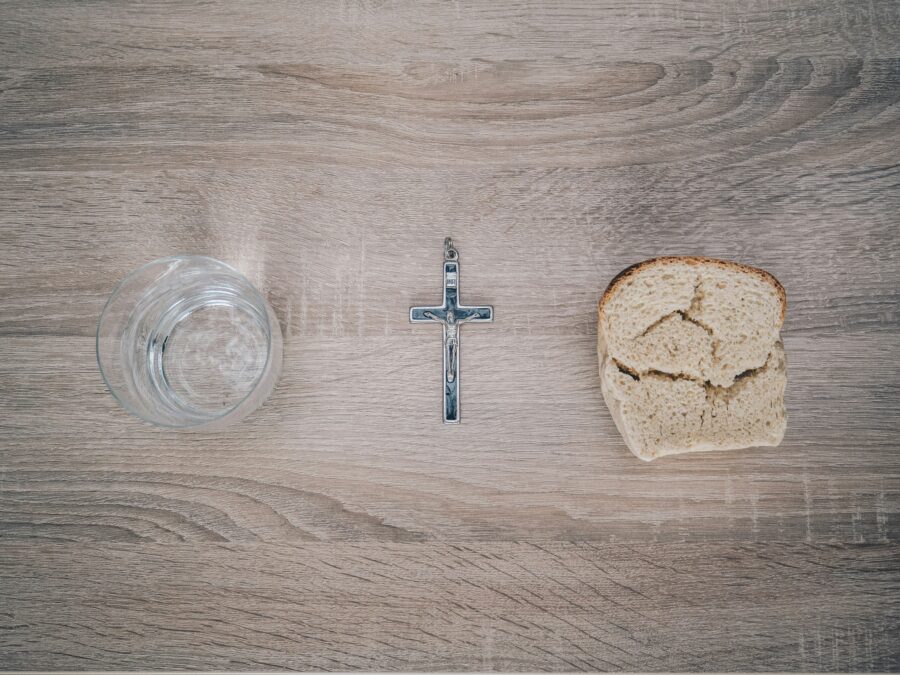
Fasting is also found in Christianity, Judaism, Buddhism and many other spiritual traditions. The forms differ, but the motives are often surprisingly similar. Reduction, mindfulness, connection with God, with one's inner self, with the community.
Especially in a time that is loud, fast and performance-oriented, fasting is almost like a counter-design, a deceleration. It invites us to consciously slow down. Not to consume everything that is available. Not to react immediately to every impulse. But to create space for thoughts, feelings and encounters.
The perspective of Rev. Dr. Daniel Mbaya, President of our partner church in Nigeria, shows how personally and at the same time differently fasting is experienced. He describes fasting as a deeply inner attitude that has less to do with strength than with conscious vulnerability:
„I discovered what fasting means to me personally and spiritually through my own experiences, not through what I have read, studied or learned from others.
Fasting for me is a conscious decision to put myself at my lowest, weakest point so that God may be exalted, honored and recognized as worthy.
It constantly reminds me of my own limitations and at the same time points to God's abilities. Fasting strengthens my faith in Christ, deepens my prayer life and draws me deeply into the study of God's Word.“
- Rev. Dr. Daniel Mbaya, Ekklesiyar Yan'uwa a Nigeria (EYN)
Fasting today: personal, diverse, voluntary
Not every religious person fasts. Not every fasting person is religious. And not every form of fasting follows fixed rules. This is also part of the reality and openness that many people live today.
For me, fasting is less a duty than an attitude. The willingness to ask myself questions. What do I really need? What can I let go of, in the short or long term? And how can I treat myself and others more consciously?
I find it remarkable that Ramadan and the fasting period before Easter on February 18 coincide this year. Not as a symbol, but as an invitation to reflect on what we have in common. About forms of pause that are rooted in different religions and yet pose similar questions.
This attitude of listening and respect is also the basis of Peacebuilding. In our work, we experience time and again how important spaces are in which people from different backgrounds can meet each other. It is precisely where dialog is possible that trust, understanding and long-term prospects for a more peaceful coexistence emerge.
Perhaps this is precisely the unifying power of fasting across religious boundaries. It reminds us that growth often begins with less. And that spirituality does not divide, but can unite if we give it space.