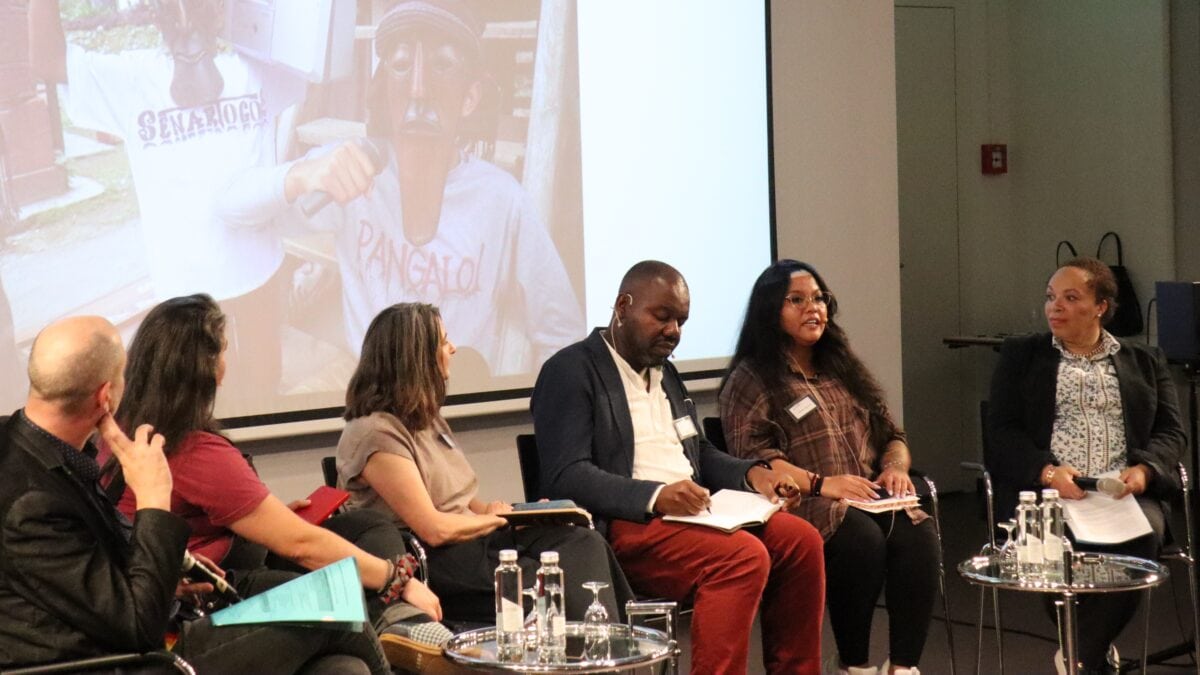
«Decolonizing the Future» was the title of the joint panel discussion organized by Mission 21 and the Museum der Kulturen Basel. Experts in history, linguistics, and literary studies contributed diverse perspectives to a stimulating discussion. The performance by the cultural association PLOUS offered a poetic approach to the evening’s central question: how can a decolonial, just, and peaceful future be shaped?.
The evening’s approach was based on the recognition that decolonization is an ongoing task that also affects Switzerland. Although Switzerland did not rule any colonial territories, it was entangled in colonialism—and colonial structures continue to have an impact here to this day, influencing how we shape the future. Barbara Heer, head of the Women and Gender Unit at Mission 21, moderated the event.
Friedrich von Bose, director of the Museum of Cultures and host of the evening, as well as Werner Hanak, head of Strategic Projects in the Department of Culture of the Canton of Basel-Stadt, delivered the opening remarks. They encouraged the audience to reflect on the consequences for our coexistence today and tomorrow that stem from the colonial past.
The panelists included historians Felicity Jensz and Constantje Siegenthaler, historian and poet Henri-Michel Yéré, and literary and linguistic scholar Patrizia Zanella. In conversation with Amélé Ekué, Head of the Education, Exchange, and Research Department, and Manuel Menrath, Team Leader for Education—both from Mission 21—they shared their diverse professional and personal perspectives on the topic.
An engaging opening was chosen for the approximately 50 people in the audience: Using a personally selected image, the panelists explained their respective approaches to the topic and shared their own experiences and reflections. These ranged from family traumas dating back to the colonial era, to stereotypical imagery and the loss of languages, to the challenges of freeing oneself from colonial power structures. At the same time, they presented indigenous worldviews and linguistic concepts whose symbolic richness embodies resilience and self-determined creativity.
In a second round of discussions, the panel discussed how images can be deconstructed and viewed in new ways, and how so-called «local» languages can and must be revitalized as a legacy and foundation for a growing sense of self-confidence among future generations.
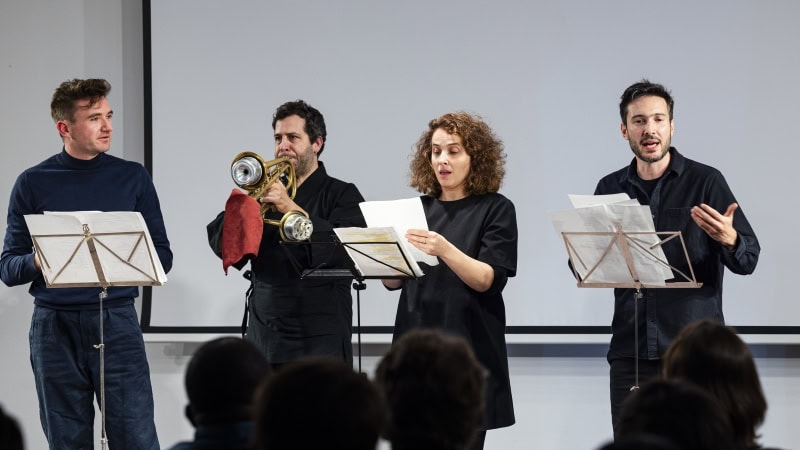
The PLOUS Cultural Association enriched the event artistically with „Remember the Future.“ PLOUS presented an impressive interpretation of excerpts from „Oktana,“ a long poem by the Greek poet Andreas Embirikos, which outlines a poetic vision of a new way of being human and a new way of inhabiting the world.
RoundTable – a new educational format from Mission 21
The evening event, „Decolonizing the Future,“ was the public portion of Mission 21’s new educational and exchange format, RoundTable. Under the title „Remembering the Future“ On October 15 and 16, 2026, experts addressed the topic of colonization as global history and decolonization as a shared responsibility. They emphasized that remembering the injustices of colonial history is not only about coming to terms with the past, but also about shaping the future: „Re-membering“ as establishing connections, as linking the past and the future. Some of the participating experts also took part in the panel discussion, thereby building a bridge to the broader public.
At the RoundTable, including in four workshops, various approaches to the topic of decolonization were discussed. It became clear that the different situations and interpretations can be understood as parts of a global network of cultures of memory. Militarism and the exploitation of natural resources in countries of the Global South have proven to be hallmarks of colonialism and continue to this day as a „colonial continuum.“.
But what paths lead to the future? One important path is remembering historical events that were previously taboo—for example, in Sulawesi (Indonesia) through interviews with eyewitnesses. Or the rediscovery of forgotten cultural elements, such as a project in Cameroon that has been reviving the suppressed Bankon language since 2023, after it was first transcribed by Basel missionaries beginning in 1912.
The involvement of the younger generation in these processes of shaping the future is crucial. It is one possible answer to the question of how children and young people—who are marginalized today as a result of colonial history—can help shape the future. Our shared responsibility is to find solutions that prevent us from living today at the expense of future generations.
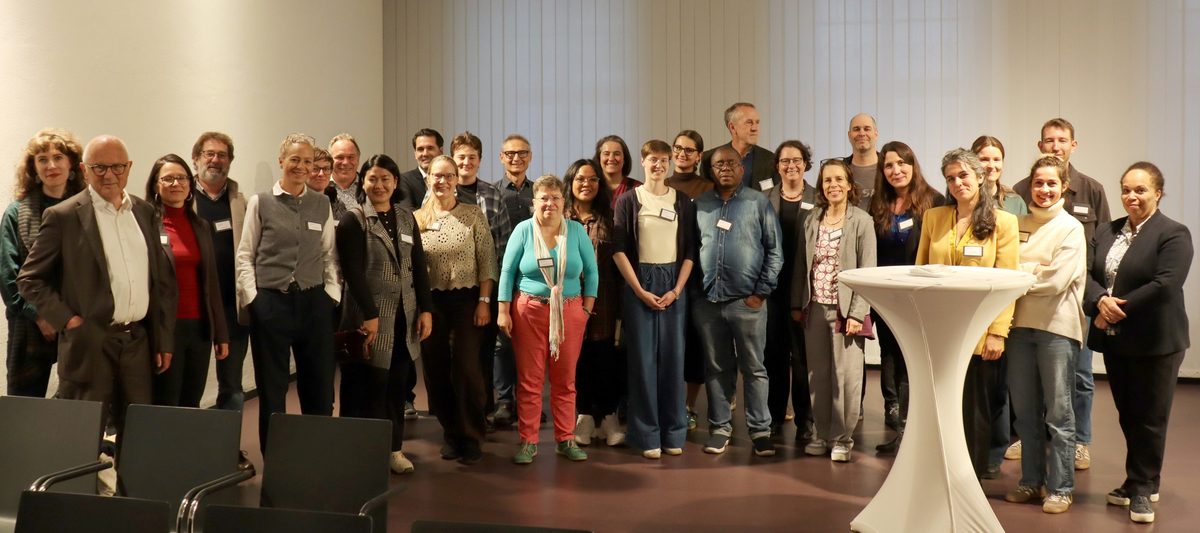
The RoundTable on Decoloniality is set to continue next year with an interdisciplinary and international lineup.