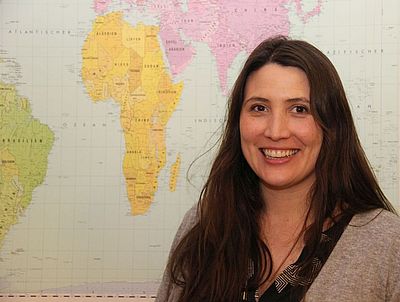


Jacqueline Brunner
Team leader church partnerships
Tel. 061 260 23 37
► E-mail
Project Number: 420.1021
Lake Titicaca is much more than just a lake. The people living around Lake Titicaca call it "Mamacota", the sacred "Mother Water" - a mystical, powerful being that protects and cares for people and nature.
In fact, the survival of the population depends on this body of water and its aquifers. Thanks to its ecological diversity, Lake Titicaca provides around 2.1 million people with food, a rich fauna and, of course, water. However, Lake Titicaca is also important because of its role in the creation history of the pre-colonial civilizations (Tiahuanaco culture and Incas) and the traditions and rites that have been passed down with it. However, the effects of global warming and environmental pollution have been threatening the water quality and the life of flora and fauna for some time now.
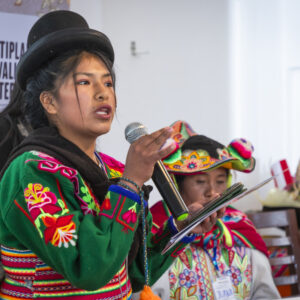
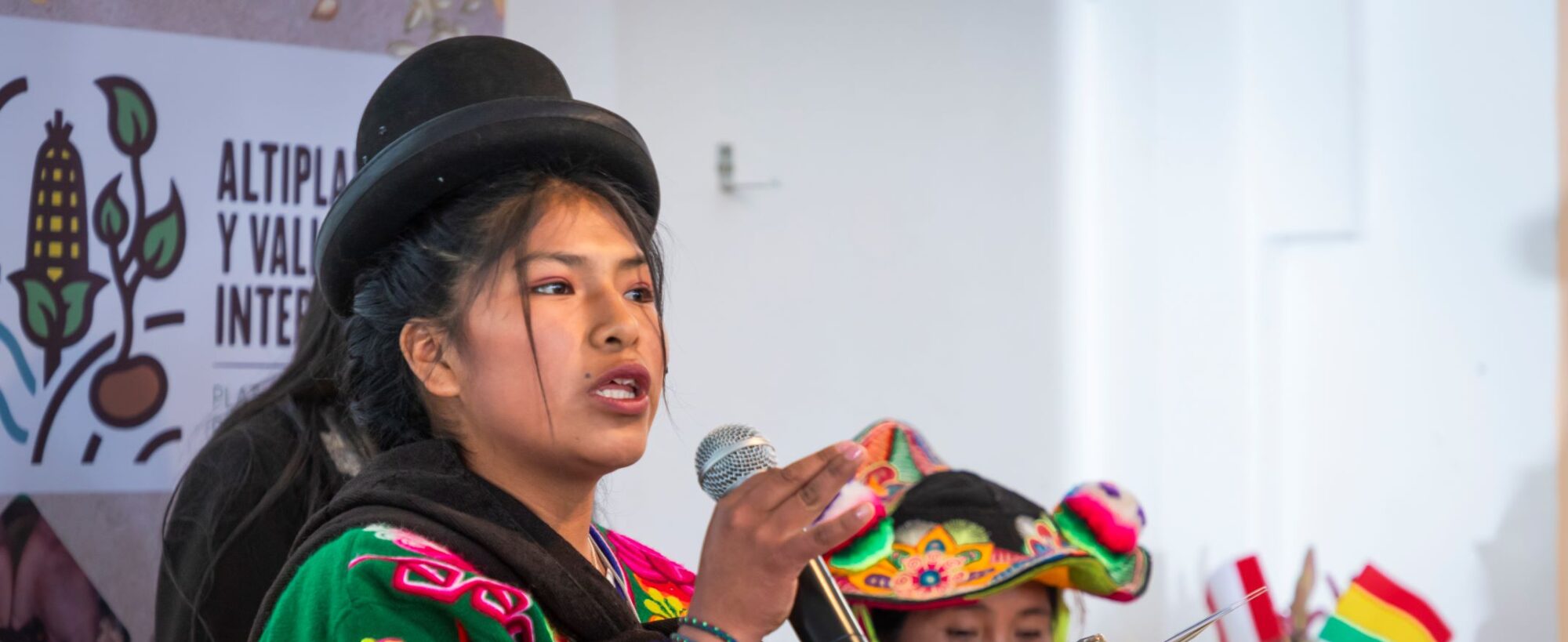
In many places, these factors are exacerbating conflicts and creating new challenges for local communities. Mission 21’s partner organizations have worked with indigenous women’s and youth associations to develop solutions to address the challenges surrounding Lake Titicaca. These initiatives pursue three goals: 1) raising awareness among the general public; 2) giving young people and indigenous women a socially relevant voice; and 3) securing recognition of the lake as a legal entity in its own right.
By recognizing the lake as a holder of its own rights, an additional legal and political lever is created to assert the interests of indigenous smallholder farming families against external claims to use the lake, pollution, or unsustainable interventions. This strengthens the territorial rights of indigenous communities and promotes their participation in land-use and water protection planning.
The project makes a significant contribution to decision-making structures in water policy at Lake Titicaca, involves the local population, and strengthens and respects the special relationship with nature. In this way, helping people help themselves can have a lasting impact.
Threatened biodiversity, falling water levels and toxic water pollution: according to experts, the world's highest navigable lake is close to an ecological tipping point. Urgent action is required. However, the political situation on the ground is characterized by weak governance, with civil society having little influence on government decisions and no consultation between municipalities. Government investment is also not focused on solving the environmental problems of Lake Titicaca.
In the midst of many pressing challenges, our partner organizations are working together with indigenous smallholder and youth associations to address the environmental crisis through various approaches and to hold government agencies accountable.
Indigenous women, together with partner organizations and legal advisors, drafted a policy regulation that was adopted by the regional government of Puno (Peru) in May 2025: This regulation recognizes Lake Titicaca as a legal entity entitled to comprehensive protection. Among other things, the regulation provides for a right to file complaints to represent the lake’s ecological interests. It also recognizes the lake’s right to ecological restoration and ensures the full participation of Indigenous communities in decision-making processes regarding water policy.
This ecocentric approach makes it possible to draw on the spiritual understanding of indigenous communities and to ascribe a deeper meaning to water. However, the ordinance also reaffirms the local population’s right to access, use, and control water resources. At the same time, it emphasizes the right to environmental protection and the protection of the «productive capacities» of the land.
In Bolivia our partner organizations are working with three secondary school classes in the field of environmental education. In addition to imparting knowledge and skills on water issues, this also includes waste collection campaigns, raising public awareness and project work along the Katari River and in larger urban centers such as Copacabana, Puno and El Alto. The Katari is a main water artery and at the same time a main source of pollution in Lake Titicaca.
In Peru our partner organizations work with the same approach with young people from six school classes along Lake Titicaca.
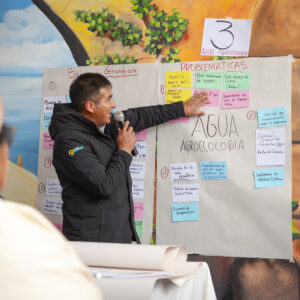
Our partner organizations aim to raise awareness among both the general local population and tourists. To this end, they carry out awareness-raising campaigns in collaboration with indigenous women’s and youth associations. These include trash collection drives, the «Lake Titicaca Without Borders» festival, as well as theater performances and art events.
The project also organizes binational dialogue forums where civil society actors, members of local and regional government authorities and representatives of environmental ministries come together to discuss challenges, best practices and solutions. Special attention is paid to ensuring long-term opportunities for indigenous women and young people to participate in political dialog. On the other hand, concrete measures are also developed, which are taken up and partially implemented by the local authorities. Ensuring a direct dialog between Peruvian and Bolivian authorities in the Lake Titicaca project region also opens up new insights into the complexity of the problem and makes the urgent need for binational coordination tangible.
Our partner organizations are planning their third large-scale, binational trash cleanup campaign this year. With approximately 1,100 participants, the goal is to clear trash from the shorelines at various locations around Lake Titicaca and along the Katari River.
Our partner organizations take part in existing round tables, so-called "mesas", on poverty reduction, health care and agriculture. Wherever possible, they support the development of action plans and are committed to improving natural resource management and better coordination between the authorities.
Mission 21 has been supporting this work to protect Lake Titicaca as a new project since January 1, 2025. It complements the long-standing project work of our partner organizations in the area of food sovereignty and with the aim of supporting indigenous women and young people in Peru in order to strengthen their political participation and improve environmental protection.
Together with its partner organizations, Mission 21 supports indigenous women and youth from the local Aymara, Quechua, and Urus communities in acquiring knowledge and skills in environmental education and strategic public advocacy, as well as in organizing environmental action days. Mission 21 supports local efforts to recognize Lake Titicaca as a legal entity by providing legal advice from experts.
Since January 1, 2025, the project has been run as a separate initiative. Even before that, binational meetings between Aymara- and Quechua-speaking women and young people from Bolivia and Peru had already been taking place for two years.
Last year, the partner organizations, together with Mission 21, succeeded in significantly strengthening the social and political participation of women, men, young people, and communities in the Lake Titicaca watershed and in promoting collective measures to protect the lake. Cross-border relations between Peru and Bolivia were consolidated through the second binational meeting. A major milestone was the signing of the Pact for the Protection of Lake Titicaca, which reaffirms joint commitments. In addition, cultural and environmental campaigns were carried out, such as cleanup efforts, a community-based water monitoring initiative, the „Titicaca Without Borders“ festival, as well as poetry contests and murals.
All of these events and initiatives raised public awareness of the need to protect Lake Titicaca, fostered a collective commitment to the environment, and strengthened cultural identity.
The goal is to sustain this progress and build on it in the long term. This is based on the ongoing commitment and collaboration of the Peruvian partner organizations (CBC, IDECA, Alfalit, CEDEPAS Peru, and Emaus) and the Bolivian partner organizations (FMA, Prodiasur, Plataforma Nacional de Suelos, and Focapaci).
You can also find more information in the 01/2025 issue of our donor magazine begegnen and in our podcast Voices of hope, in the following "The defenders of Lake Titicaca".
To the podcast Voices of hope: defenders of Lake Titicaca

To the movie: Mamacota - The holy mother water

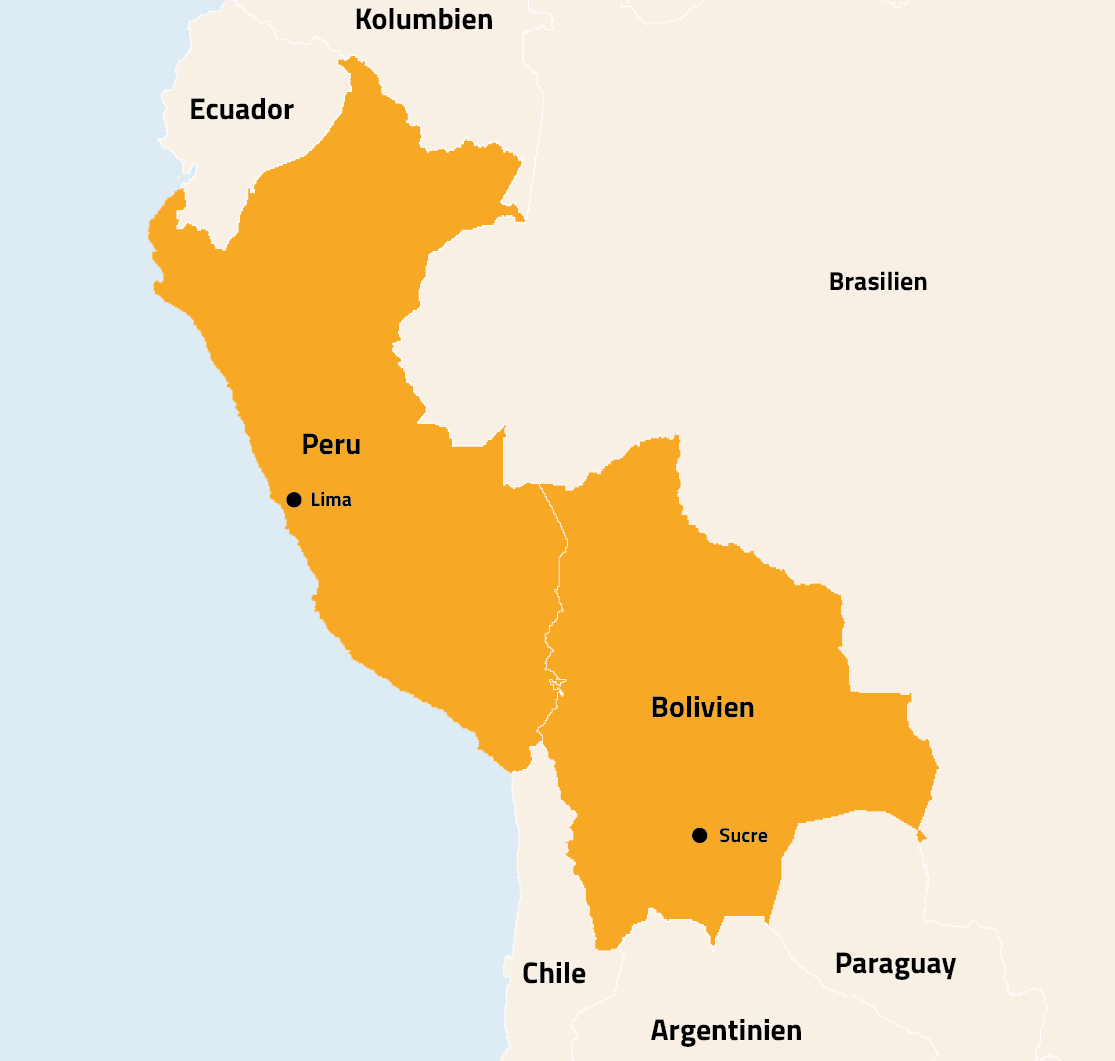
11.3 million inhabitants (2024)
36.4% live below the poverty line (2023)
34 million inhabitants (2023)
33% live below the poverty line (2023)
CHF 91,000
Mission 21
Protestant Mission Basel
PO Box 270
Missionsstrasse 21
4009 Basel, Switzerland
Tel.: +41 (0)61 260 21 20
info@mission-21.org
Donation account Switzerland:
IBAN: CH58 0900 0000 4072 6233 2
Tax exemption number:
CHE-105.706.527
Donation account Germany:
Savings Bank Lörrach-Rheinfelden
Swift BIC: SKLODE66
BLZ: 683 500 48
IBAN: DE39 6835 0048 0001 0323 33
Account No. : 1032333