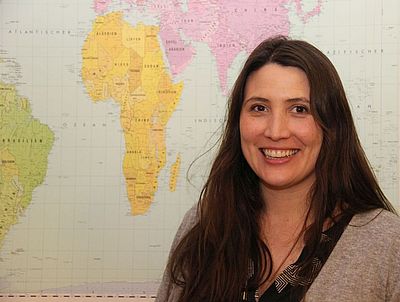



Jacqueline Brunner
Team leader church partnerships
Tel. 061 260 23 37
► E-mail
Project Number: 400.1021
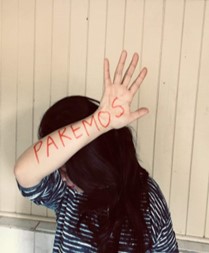
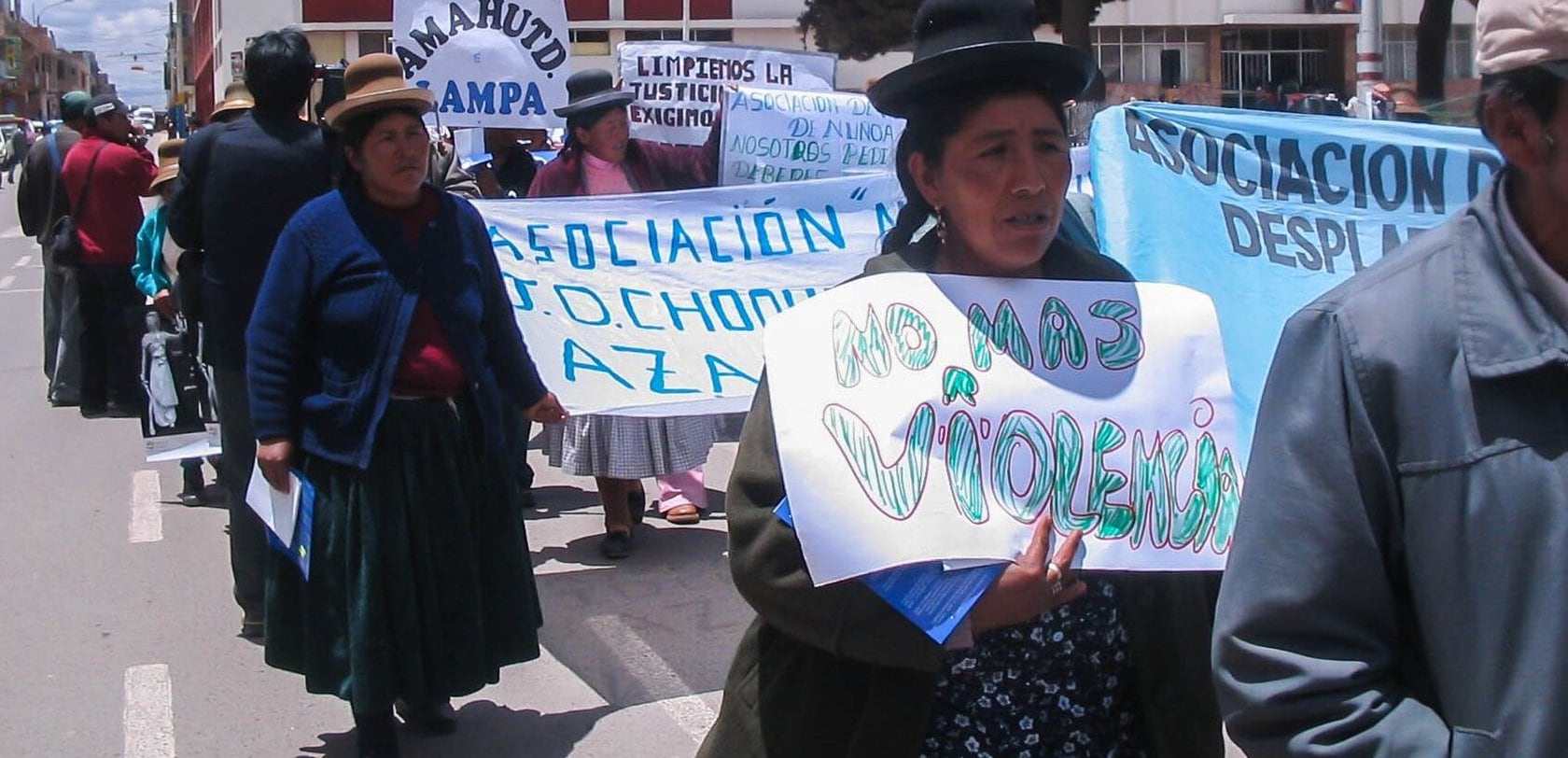
Threats, insults, beatings: Over two thirds of adult women in Bolivia and Peru have experienced violence. Almost nowhere else in the world is violence against women and girls as pronounced as in Latin America. Sexualized violence in particular is widespread and affects women, children and young people.
Sexualized violence affects the physical and mental health of those affected and repeatedly results in unwanted pregnancies and the infection of diseases; it is even the cause of suicides. In Peru, 92 percent of the statistically recorded victims of sexualized violence are female. And every year, more than 1,400 girls under the age of 14 give birth to a child as a result of abuse.
Together with our partner organizations in Bolivia and Peru, Mission 21 promotes the prevention of violence as well as psychosocial and legal support for victims of sexual and domestic violence. Children and young people in Bolivia as well as girls, women and transgender people in the greater Lima area (Peru) are reached.
Together, we contribute to the right to a life free from physical and psychological violence and strive for gender equality and peaceful societies.
This project is part of the 2026 campaign, which focuses on the topic of „Together Against Violence“ and the efforts of our partner churches and organizations to combat gender-based violence. Learn more and join the campaign.
In terms of political representation, women are present in both Bolivia and Peru and important legal progress has been made in recent years to achieve more equal opportunities. Nevertheless, femicide, rape and sexualized violence against women, non-binary people, children and young people are on the rise in both countries.
In Peru, the authorities registered a total of 146 femicides and more than 140,000 cases of violence against women in 2023. Around 29,000 of these, i.e. around one in five, involved sexual violence.
The situation was similar in Bolivia in 2023. 81 femicides, 25 child murders and 11,450 reports of sexual violence were registered.
The lack of motivation on the part of the authorities in both countries to combat sexualized violence more effectively can be seen in the high number of women and girls registered as disappeared, which is growing year after year. Between January 2018 and July 2021, 46,762 women and girls disappeared in Peru, more than 60 percent of whom were minors, and these cases are generally associated with human trafficking, forced prostitution, forced labor and organ and child trafficking.
Currently, 46 women's shelters and around 400 state emergency call centers in Peru offer advice and protection. However, according to our partner organization Flora Tristán, they are unable to meet the high demand from women seeking protection from domestic violence.
Due to their disabilities, women and children with disabilities are much more often the target of sexual and other violence than people without disabilities.
In Bolivia, people with disabilities face numerous obstacles, leading to poverty, violence, social exclusion and discrimination. A legal framework does exist to protect people with disabilities from violence. However, there are gaps in these standards and they are hardly known to those affected or to the relevant authorities, which means that they are often not applied.
The study by our partner organization Flora Tristán shows that assaults on vulnerable people take place in supposedly "safe" environments: within the family, at school or in a healthcare facility. Many cases are neither reported nor reported, which is why they are referred to as "invisible victims".
In Bolivia and Peru, complaints often fail due to the bureaucratic system or untrained staff who are unable and unwilling to offer help. As a result, victims question the usefulness of filing a complaint or refrain from doing so. However, if a complaint is made, the victims are often persuaded to seek out-of-court mediation. Victims are thus denied access to the legal system in practice.
Very few perpetrators therefore have to fear sanctions, with only 10 percent of reports leading to a conviction (Peru). The statistically recorded cases of sexualized violence are only partial - the number of unreported cases is likely to be high.
We support the project work of partner organizations that pursue the right to a life free from physical and psychological violence and work persistently on social and legal reforms to achieve a gender-equitable and peaceful society - in accordance with UN Sustainable Development Goals 5 and 16.
In Bolivia, we support our partner organization Machaqa Amawta in its work at nine schools in La Paz (Andes) and Riberalta (Amazonas). In regular workshops, children and young people with and without disabilities are made aware of sexualized violence in an age-appropriate manner and are encouraged to recognize dangers, set boundaries and seek help where necessary using playful methods.
Children learn what adults can and cannot do with them. They learn to find words for their private parts - this is also taboo in Bolivia - or to recognize the difference between a good and a bad touch or a good and a bad secret.
Our partner organization has developed its own educational material for this purpose, which focuses in particular on the needs of children and young people with disabilities. In addition, teachers, school management and interested parents are sensitized to the topic and informed about the legal duties to protect. The work also includes supporting schools in developing a roadmap with specific instructions for action. The main target groups of the project work together with Machaqa Amawta are
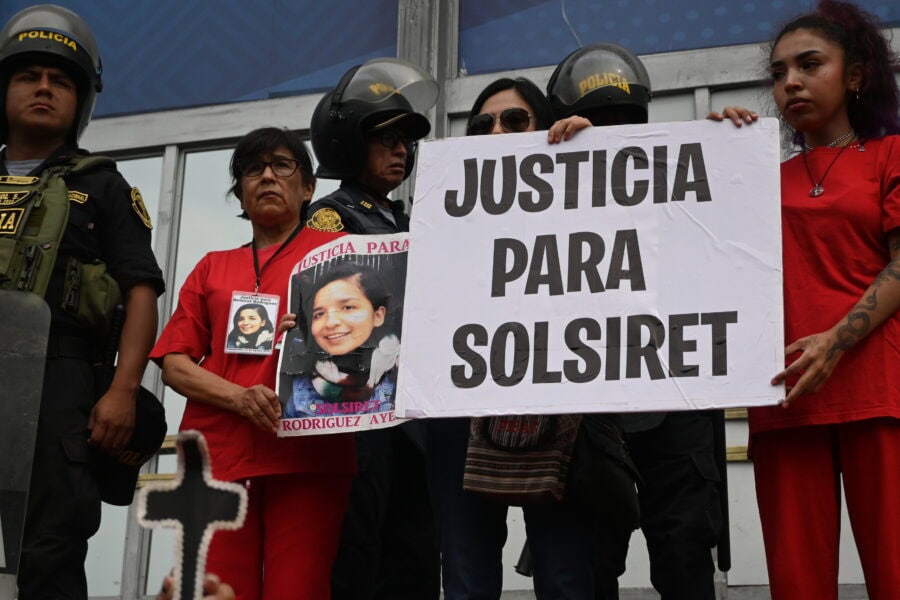
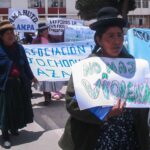
The Flora Tristán Peruvian Women’s Center (PFZ) is a feminist partner organization of Mission 21 that has been working for more than 45 years to defend women’s rights in all their diversity—in particular, the right to a life free from violence and the promotion of gender equality. In their area of operation, they raise awareness among law enforcement agencies and organize vocal protests in public spaces to inform the public about injustices and urge the authorities to take action.
This feminist-oriented public relations work supports victims and relatives of gender-based violence and serves as a strategy for raising public awareness.
Mission 21 supports the PFZ Flora Tristán with its work in two regions, the catchment area of the capital Lima and the rural area in Cusco.
In the Andean communities, our partner organization combines the prevention of sexualized violence with strategies to promote women's income and political participation through agroecological farming.
Women become knowledge carriers for food security and generate income for their households and village communities. On the one hand, this allows them to expand their decision-making scope within the household. On the other hand, they are seen as key figures in adapting to climate change at community level, and the male population gives them a greater say.
The main target group for the project work is from 2025:
Casa DEI in Costa Rica The cooperation with "Casa Dei", the shelter for persecuted human rights activists from all over Latin America, in Costa Rica is being continued in a separate project, together with our partner organization, the Ecumenical Research and Training Center DEI. It bears the project number 400.1020.
Flora Tristán empowered female producers to secure their own food and become more economically independent. In workshops at the agroecological school, the women acquired knowledge about sustainable cultivation, food security and food sovereignty. As multipliers, they passed on this knowledge in their communities. In the communities of Huasao, Patabamba and Muñapata, the women producers improved their work in very concrete terms: good cultivation methods were introduced, 30 greenhouses and drip irrigation systems were maintained and used in the fields. Ongoing technical support on site helped the women to implement what they had learned on their own - independently of external support. In addition, 15 heads of district and provincial committees received targeted technical support. At the same time, the project gained political and social support. The women's association and Flora Tristán were integrated into committees in the political municipalities of Oropesa and Urcos. Flora Tristán carried out awareness-raising campaigns at markets and fairs in Cusco to raise awareness of the right to healthy food and sustainable production, reaching 920 people.
In 2025, the project specifically strengthened the protection and self-efficacy of children and young people with and without disabilities who are affected by violence. Therapeutic services helped them to develop self-protection strategies and deal with stress. Parents and caregivers also received support in order to create a more stable and protective family environment. One focus was on prevention in education: training courses on physical, sexual and digital violence taught children and young people about risks, rights and reporting channels. As multipliers, they passed on this knowledge in their classes. At the same time, school committees were strengthened and inclusive, non-violent spaces were promoted.
FMA dealt with 146 newly reported cases of violence and provided psychosocial and legal support to those affected and their families; 81 children and young people successfully completed therapy. FMA also worked with schools, special education centers, authorities and the police. Training courses on barrier-free communication for police officers and the involvement of young people in local prevention initiatives strengthened protection structures in the long term.
Flora Tristán in Lima implemented targeted measures to prevent violence in 2025. These included digital information and awareness-raising services, meetings with legal advisors in the San Juan de Lurigancho district and support for their advisory work on the ground. In addition, the Flora Tristán Lima at public advocacy events to make violence visible and embed prevention.
Those affected by gender-specific violence received concrete support: legal advice and legal support, psychological and social care - especially in cases of abduction. In acute emergencies, Flora Tristán was able to support victims of violence from a feminist social fund. The project was also involved in lobbying and advocacy work for better protection for women and children. Feminist activists were accompanied during mobilization campaigns in public spaces, and discussions with strategic actors promoted political measures in favour of women's rights.
In the Film "Strategic litigation against violence against women" In the following film, our partner organization Flora Tristan gives an insight into the legal support work of a family whose daughter was the victim of a femicide and is looking for justice.

To the podcast "Voices of hope", Episode 6 "Struggling mothers and father of El Alto" on the work of our partner Machaqa Amawta

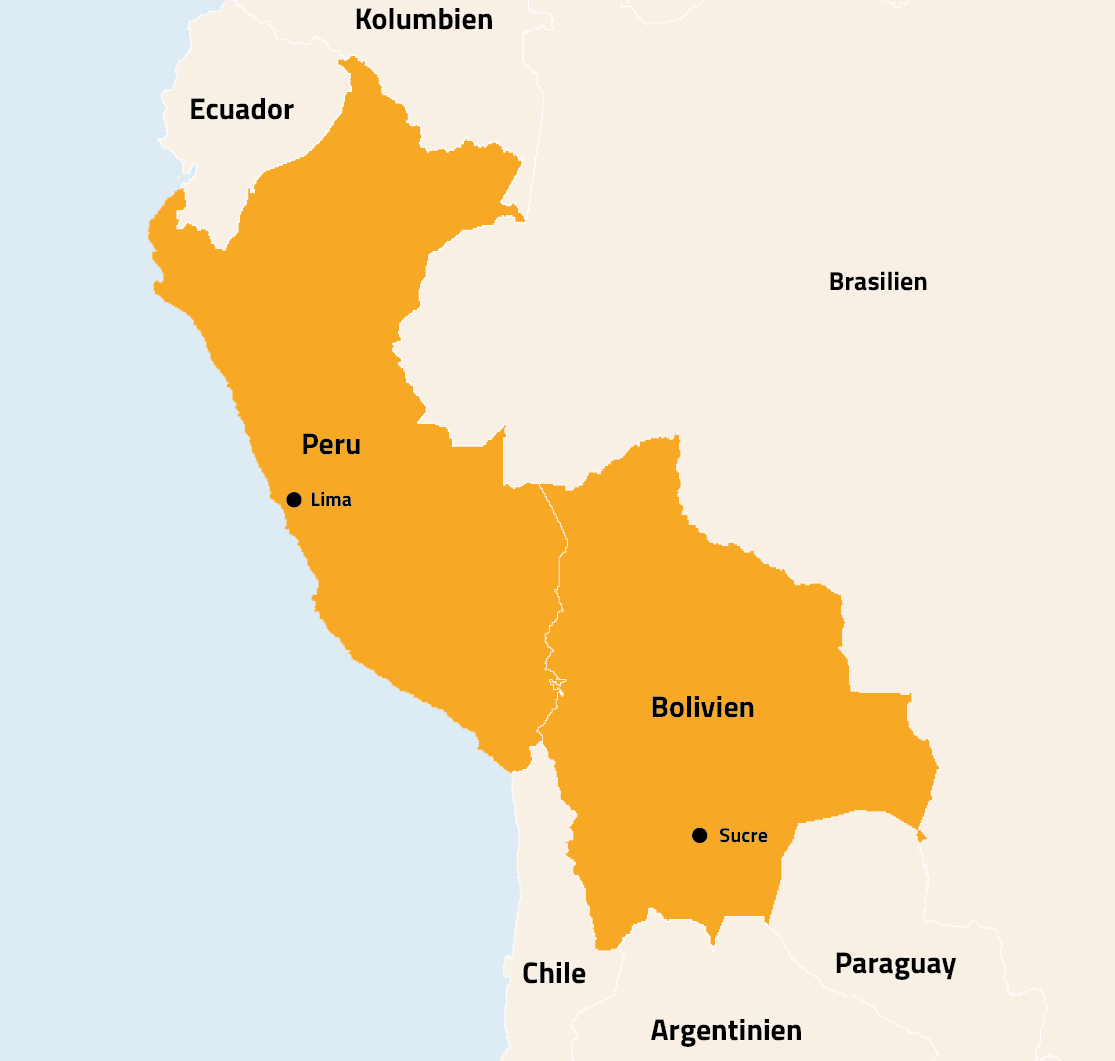
34 million inhabitants (2023)
170 femicides, 32,380 cases of sexual violence, 7,100 missing girls and women (2024)
11.3 million inhabitants (2024)
84 femicides, 38 child murders, 9,363 reports of sexual violence (2024)
CHF 195,000
Mission 21
Protestant Mission Basel
PO Box 270
Missionsstrasse 21
4009 Basel, Switzerland
Tel.: +41 (0)61 260 21 20
info@mission-21.org
Donation account Switzerland:
IBAN: CH58 0900 0000 4072 6233 2
Tax exemption number:
CHE-105.706.527
Donation account Germany:
Savings Bank Lörrach-Rheinfelden
Swift BIC: SKLODE66
BLZ: 683 500 48
IBAN: DE39 6835 0048 0001 0323 33
Account No. : 1032333